



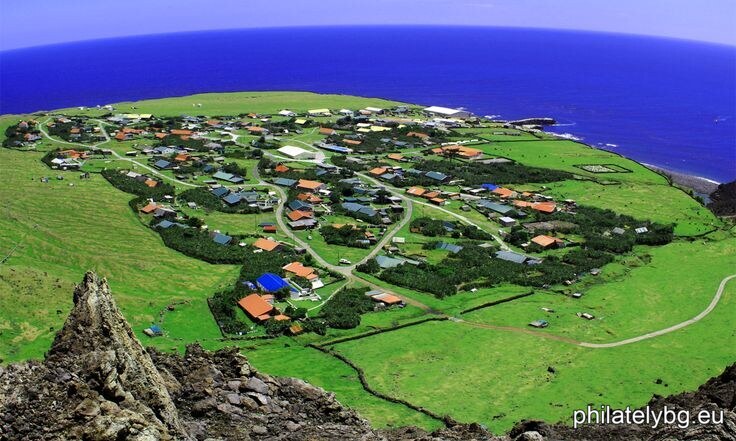
In the South Atlantic there is a settlement with no airport, where letters arrive by ship. The story of its mail, its stamps, and an eruption that made one overprint a rarity.
If you want to send a letter to the most isolated permanent settlement in the world, the address looks like this: Edinburgh of the Seven Seas, Tristan da Cunha, TDCU 1ZZ. The only settlement on the main island of the Tristan da Cunha archipelago in the South Atlantic is called “Edinburgh of the Seven Seas”, and locals simply call it “the Settlement”. The island is regarded as the most remote inhabited island in the world: it is about 2,810 kilometers from Cape Town, there is no airport, and the only way to get there is by ship, a voyage of five to ten days depending on the weather and the vessel. About 250 to 300 people live there, the figures differing by year and source. There, mail is not just a service. It is the thread that connects a small community to the rest of the world.
Today the mail comes and goes by ship. Between Cape Town and the island travel the South African research ship “SA Agulhas” and fishing vessels such as “Edinburgh” and “Baltic Trader”, which make several voyages a year. According to one postal survey, mail is exchanged about nine times a year, that is, once every few months. Letters are posted at the post office or in the box outside it, but most often leave on the ship the traveler arrived on, and reach the addressee after about two weeks. There are last posting dates for each ship. The legal framework is old: the Post Office (Tristan da Cunha) Ordinance of 1898 applies British postal laws there and leaves it to the Administrator to fix the rates. In 2005 Royal Mail gave the island the postcode TDCU 1ZZ, because mail was getting lost and its capital was being confused with Scottish Edinburgh. The post office also has a small café.
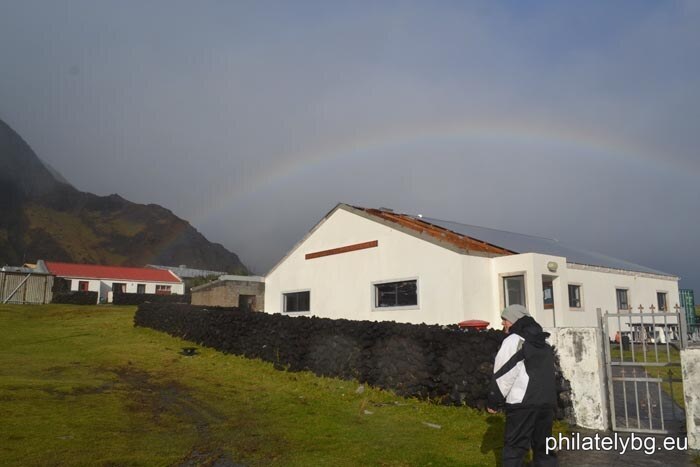
Before the stamps we know, mail depended entirely on chance ships. From 1881 letters from Tristan da Cunha were sent without stamps, and from 1918 stamps of Ascension, Great Britain, St Helena and South Africa were used when available. Postmarks and cachets existed much earlier than the island’s own stamps. Ships came rarely: the “Empress of France” called there on 28 February 1928, the first ship in 11 months, and landed 54 letters and 3 packages. In 1932 mail for the island was piling up at the Simonstown post office in South Africa because no ship had called for ten months. So in 1933 London arranged with the Cunard Steamship Company for the “Corinthia” to call on its world cruise. In 1934 the “Atlantis” landed 12 tons of provisions and mail, and some of the letters bear an oval ship cachet that collectors greatly prize today. In 1927 a question in the House of Commons claimed that two or three years sometimes passed without a ship, but those were words spoken in Parliament, not a verified statistic.
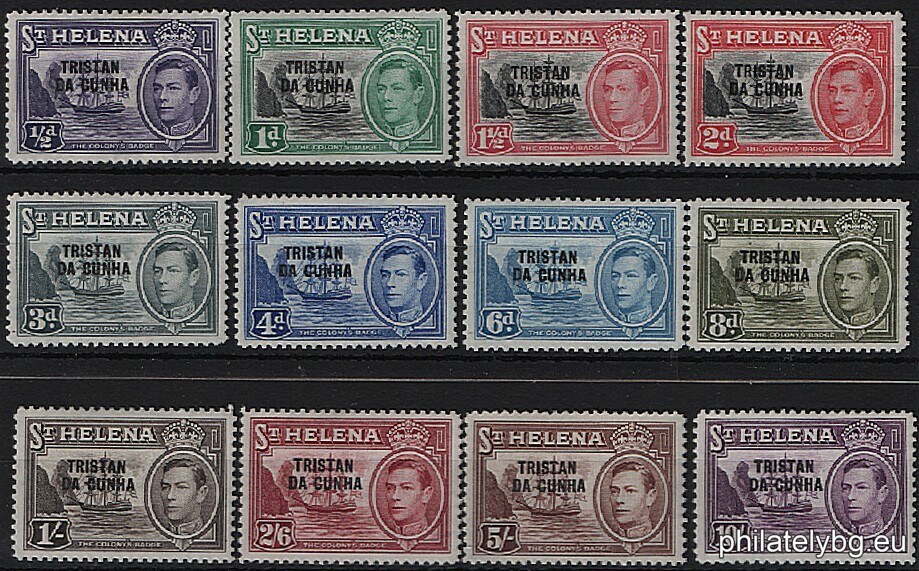
 The island became a dependency of St Helena on 12 January 1938. The first stamps of Tristan da Cunha appeared on 1 January 1952: twelve St Helena stamps overprinted “TRISTAN DA CUNHA”. The first stamp of its own was for the 1953 Coronation of Queen Elizabeth II, and in 1954 a set with island themes appeared. There is also a curiosity: according to one survey, in 1946 labels were issued showing penguins with potatoes as the currency, and one of them, the 4-potato red, is included in the 1979 miniature sheet for the centenary of the death of Rowland Hill. These are labels, not regular postage stamps.
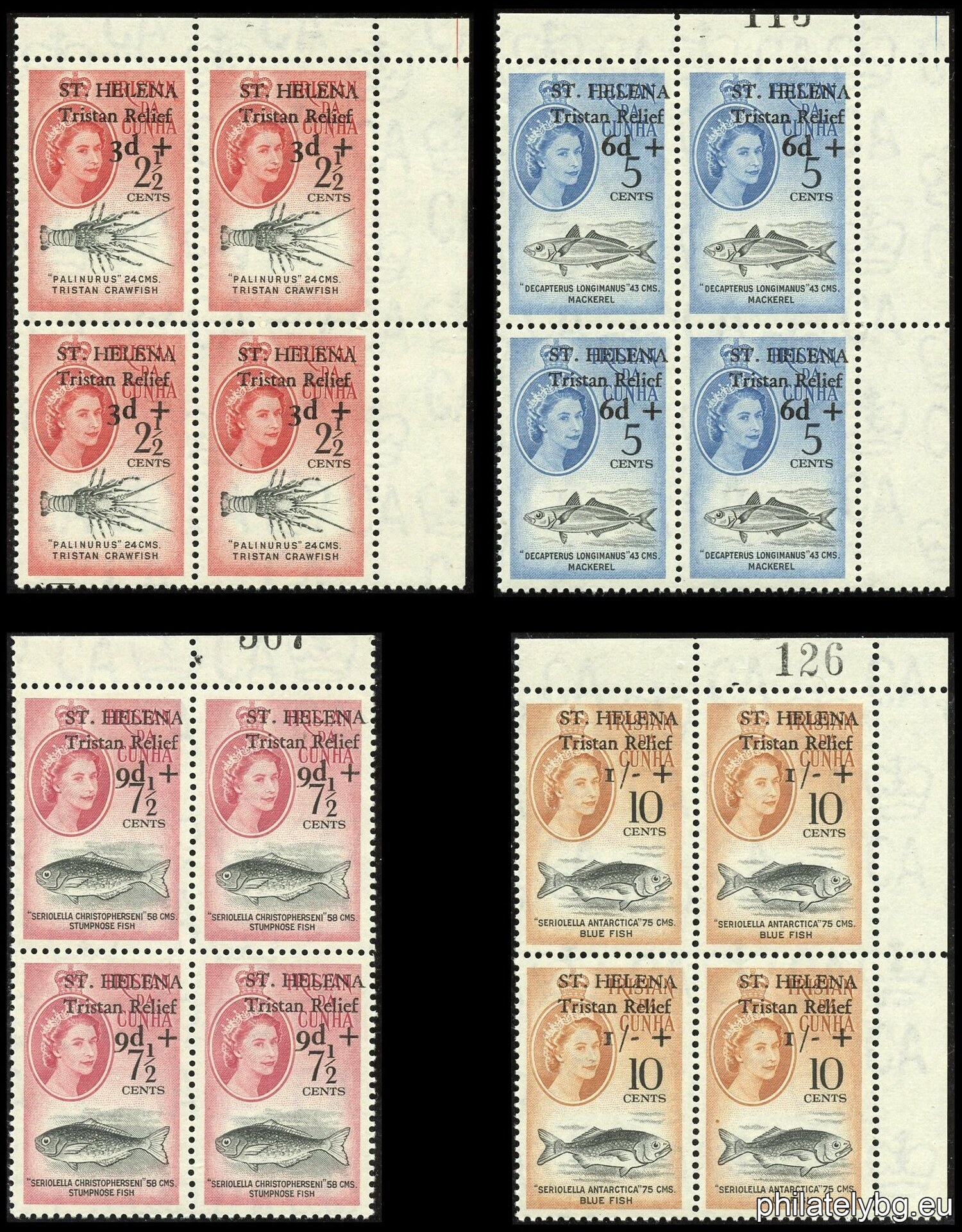
On 10 October 1961 the island’s volcano erupted and about 300 inhabitants were evacuated to Britain. They returned in 1963. On that occasion St Helena set up a Relief Fund and issued stamps overprinted “ST. HELENA Tristan Relief”. These stamps were cancelled on 12 October 1961 and, according to Edward Hibbert, author of a reference work on the postal history of St Helena, are among the rarest issues of the British colonies in the twentieth century. The Relief Fund lost, but philately gained.
 Stamps are an important part of the island’s economy. Its government describes the livelihood as farming, fishing and the sale of stamps and coins. So the series of new themes – such as shipwrecks or dogs on the coast – is not merely a souvenir but a way for a community to live that cannot be reached by air. Tristan da Cunha also has its own literature: the main work is George Crabb’s “The History and Postal History of Tristan da Cunha” of 1980, and there is a St Helena, Ascension and Tristan da Cunha Philatelic Society (SHATPS).
This is the mail of a place where a letter does not arrive but is waited for. Every letter is tied to the ship’s timetable, to the weather and to the people who carry it across the ocean. The figures for population, number of sailings and time of the voyage differ among the sources and are therefore given approximately in this publication. What is certain is this: for more than two centuries, letters have still reached the most remote settlement in the world.
Sources
Official website of the Tristan da Cunha Government and the Tristan da Cunha Association (tristandc.com) – the post office, the economy (farming, fishing, stamps and coins), the postcode – https://www.tristandc.com/ and https://tristandacunha.org