



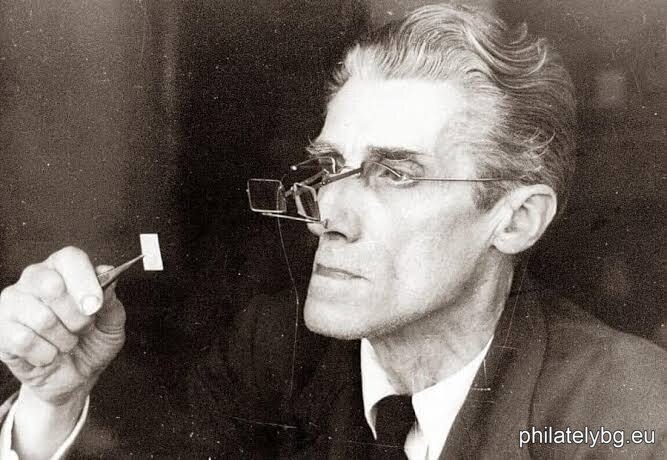
 Jean de Sperati, the man who forged rare stamps so well that experts declared them genuine.
In philately, "forgery" is a bad word. It deceives the buyer, lowers the price of genuine stamps and frightens collectors. Yet there is one forger whose works are sold at auction today, kept in museums and gathered in collections of their own. His name is Jean de Sperati. He did not see himself as a fraudster. He called himself an artist, and his stamps "reproductions".
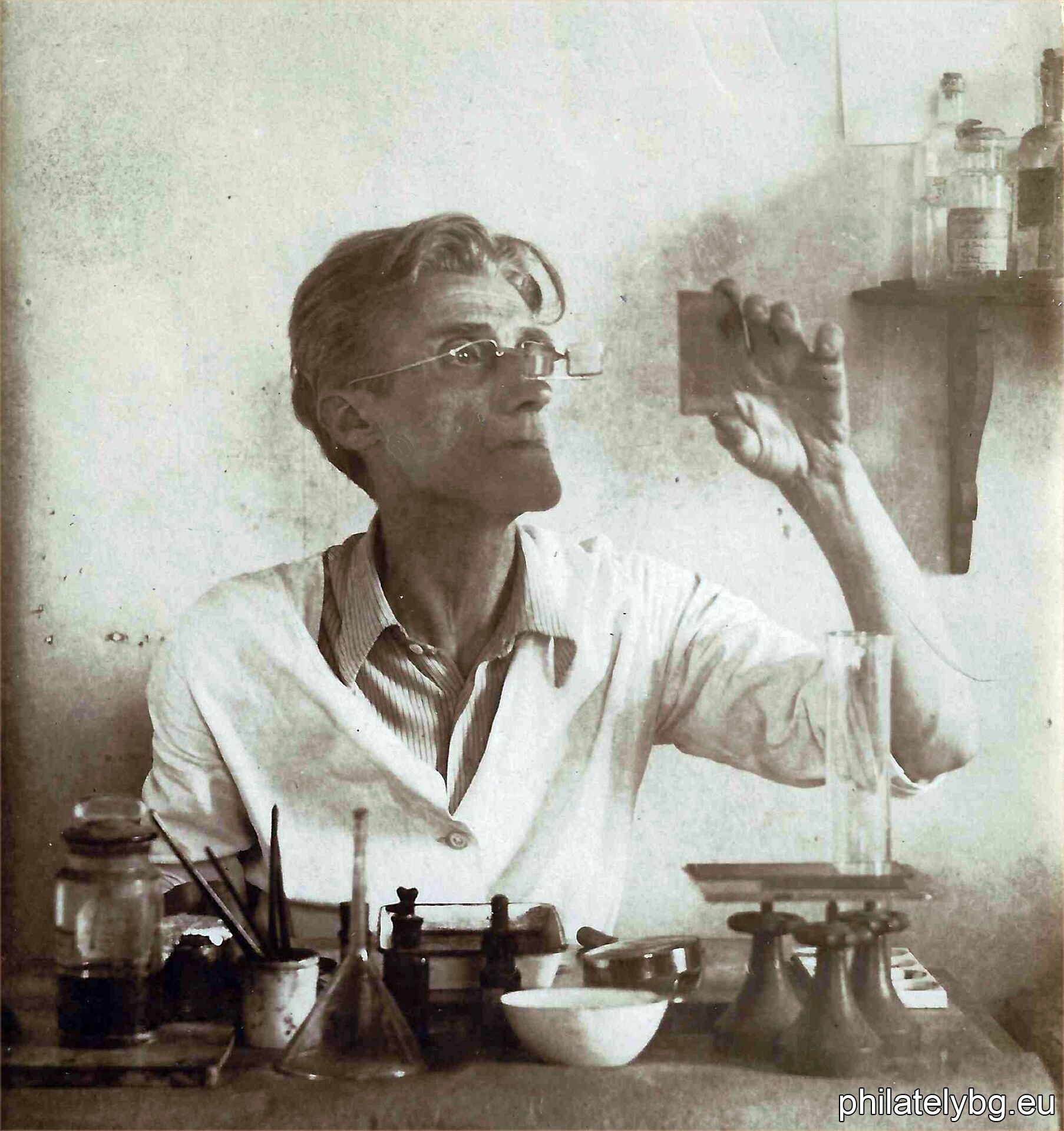 Sperati was born on 14 October 1884 in the Italian city of Pisa. His real name was Giovanni Desperati. He grew up in France. As a child he became fascinated by printing, paper, photography and stamps. This knowledge would become the basis of his extraordinary career. His first forgeries were of rare stamps from San Marino. The experts accepted them as genuine. Encouraged by his success, he began copying valuable stamps from all over the world. In 1930 he moved with his family to the spa town of Aix-les-Bains. There, in the villa "Clair de Lune", meaning "Moonlight", he set up his studio.
Sperati's secret lay in his method. He did not start from a blank sheet. He took a genuine but cheap stamp from the same period and the same country. He used chemicals to bleach out its design. What remained was the genuine old paper, the genuine watermark, the genuine perforation and often even the genuine postmark. On this base he printed the design of the expensive stamp. He used a photographic printing method called photolithography. So everything the experts checked first, the paper, the perforations and the postmark, was completely genuine. Only the design was false. Sometimes Sperati wrote lightly in pencil on the back: "Reproduction by Jean de Sperati". But pencil is easily erased.
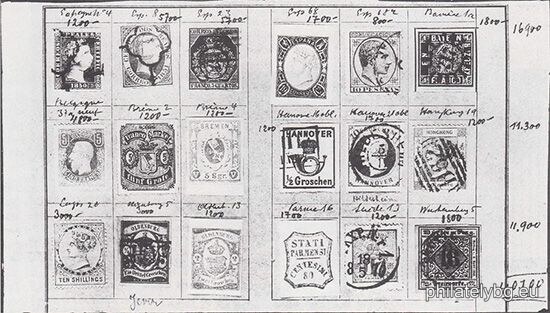 The result was astonishing. Sperati produced more than 500 different forgeries of stamps from over 100 countries. Even the most respected experts of the day issued certificates of authenticity for them. In 1946 he even published a book titled "Philately Without Experts?". In it he proudly demonstrated that specialists could not tell his stamps from the genuine ones.
His real fame came from a single shipment in 1942. Sperati sent 18 classic stamps to a dealer in Lisbon, Portugal. French customs stopped the letter. The stamps were judged to be very valuable, yet they had been declared at only a small part of their worth. Sperati was charged with exporting valuables from the country without declaring them. He stated that the stamps were forgeries. The police called in experts. They declared the stamps genuine and very expensive. Then Sperati did something unheard of. He produced another, completely identical set of the same stamps. So the forger had to prove in court that he was a forger and not a smuggler. The case dragged on for years. In 1948 the court acquitted him of smuggling. It did, however, convict him of fraud, but because of his age he did not go to prison.
 Sperati's forgeries frightened stamp dealers. In the early 1950s his eyesight was failing and he decided to stop. The British Philatelic Association bought all his stock, printing plates and tools. It paid a huge sum for the time. Sperati promised never to make stamps again. His reason for selling his tools was simple. He did not want them to fall into the hands of someone who would copy his work. The Association stamped the back of every item to mark it as a reproduction. In 1955 it published a book describing 358 of his forgeries. A great admirer of Sperati and one of the driving forces behind the deal was the well-known British philatelist Robson Lowe.
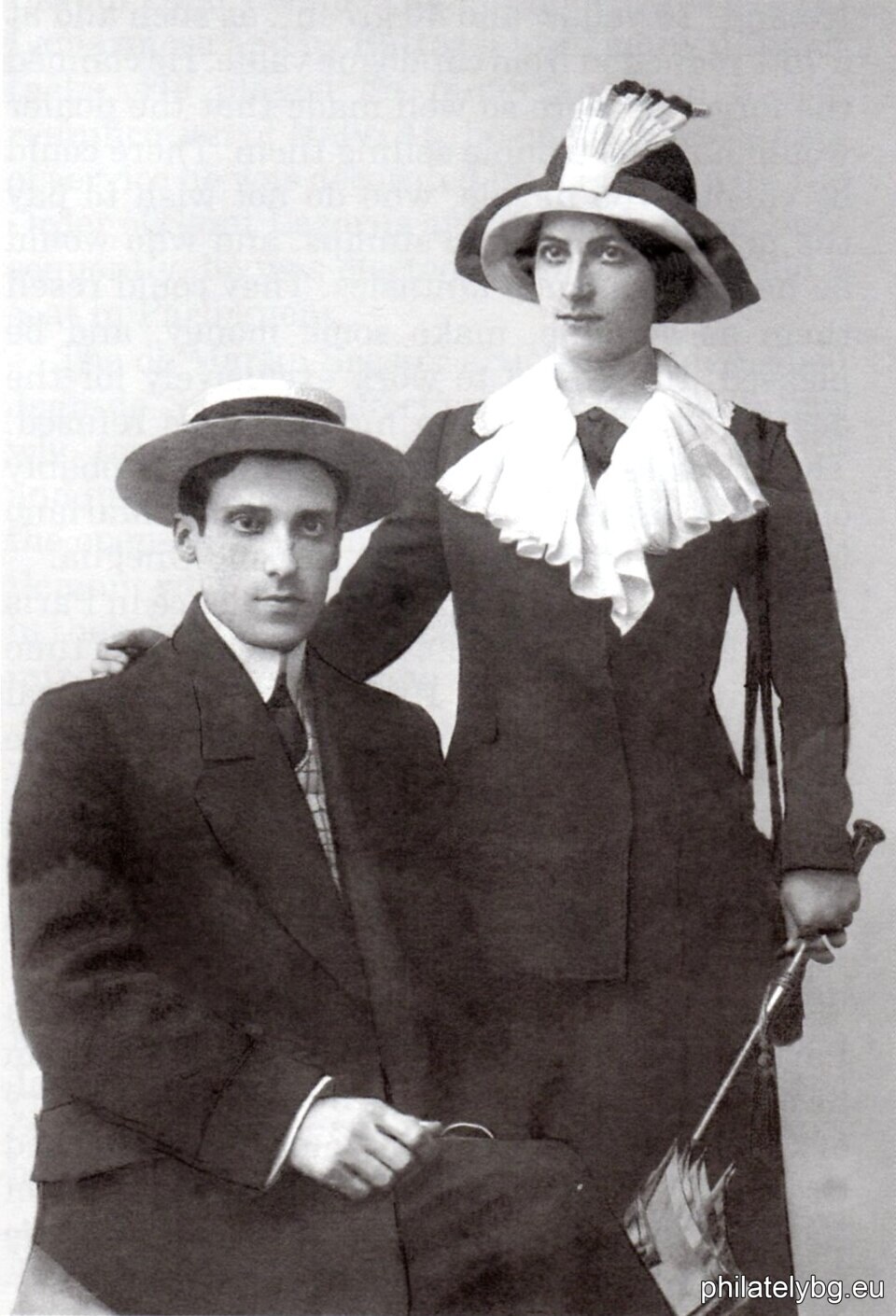 Sperati died on 28 April 1957 in Aix-les-Bains. But his story did not end there. In 2001 the Royal Philatelic Society London published a second book. It described a further 102 of his forgeries that had been unknown until then. Many of his stamps have still not been identified. They sit in old collections, sometimes with a certificate saying they are genuine. One of his forgeries of a rare 1901 stamp from British New Guinea had carried a certificate of authenticity from the Royal Philatelic Society since 1939.
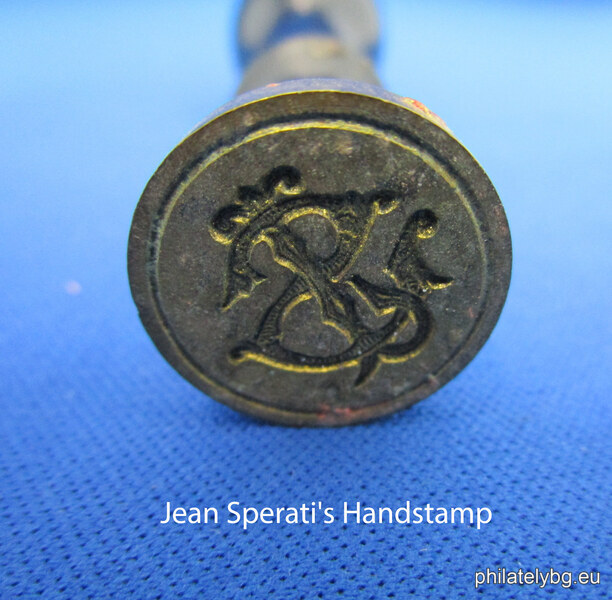
Today Sperati's forgeries are highly prized. Collectors gather them as a subject in their own right. An album of 235 of his reproductions of classic stamps was sold at auction in Switzerland in 2024 for 28,000 Swiss francs. The Royal Philatelic Society London keeps his hand printing press and his handstamps in its museum. Sperati wanted to prove that he was an artist, not a fraudster. And to some extent he succeeded. His stamps are fake, but the skill with which they were made is genuine.
Sources
The Royal Philatelic Society London
Heinrich Köhler: Wolfgang Maassen, Jean de Sperati
David Feldman
Robert Frajola: The Making of Sperati Reproductions
Sotheby’s
Glen Stephens
Trish Kaufmann
Evert Klaseboer
Mental Floss
The Daily Telegraph
Papers Past
Wikipedia: Jean de Sperati