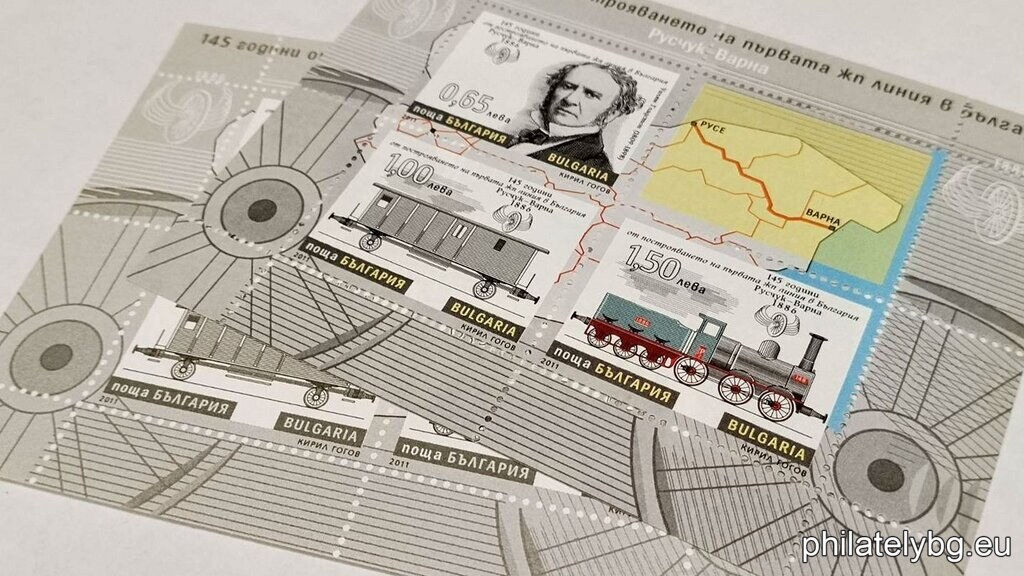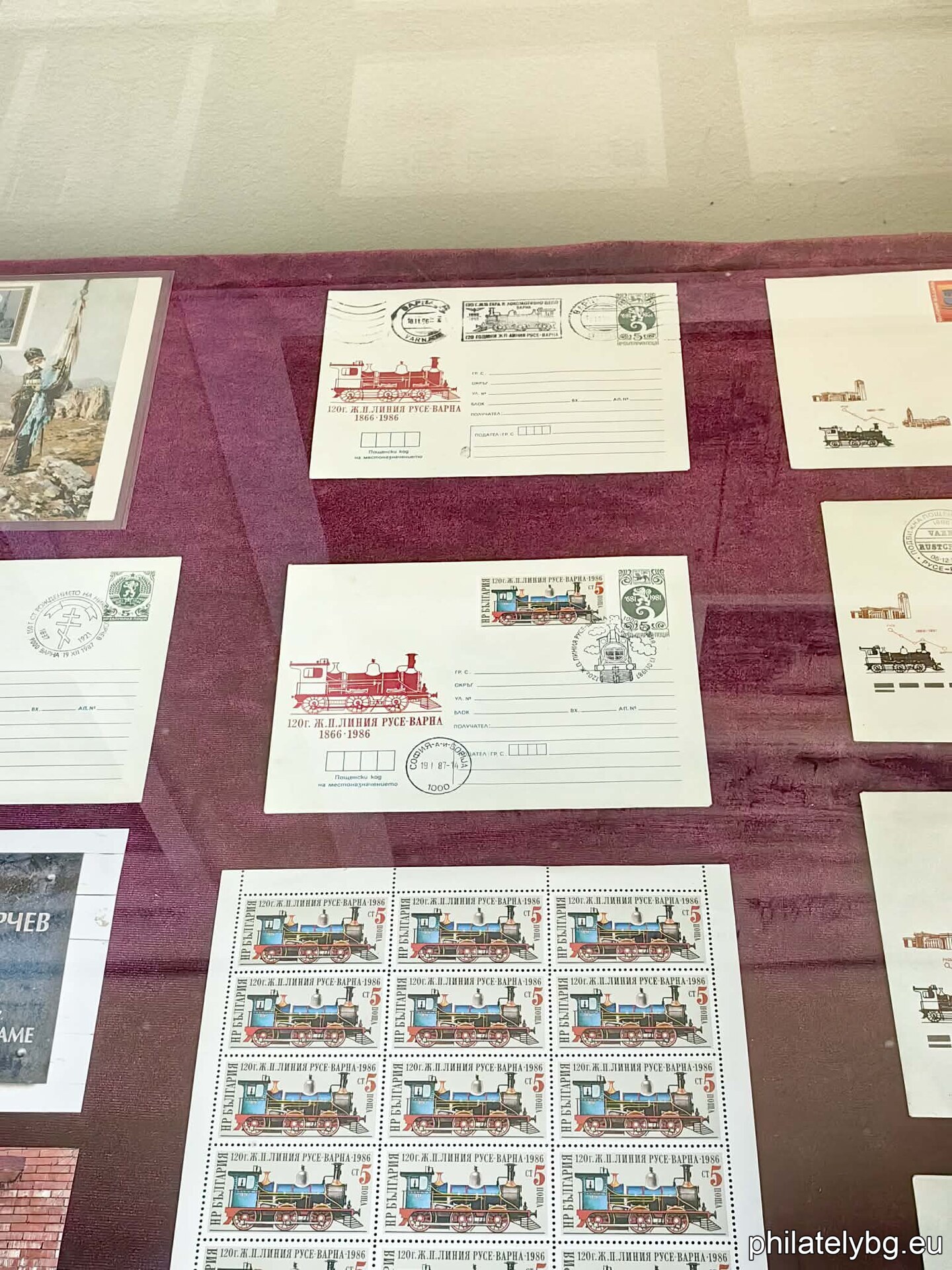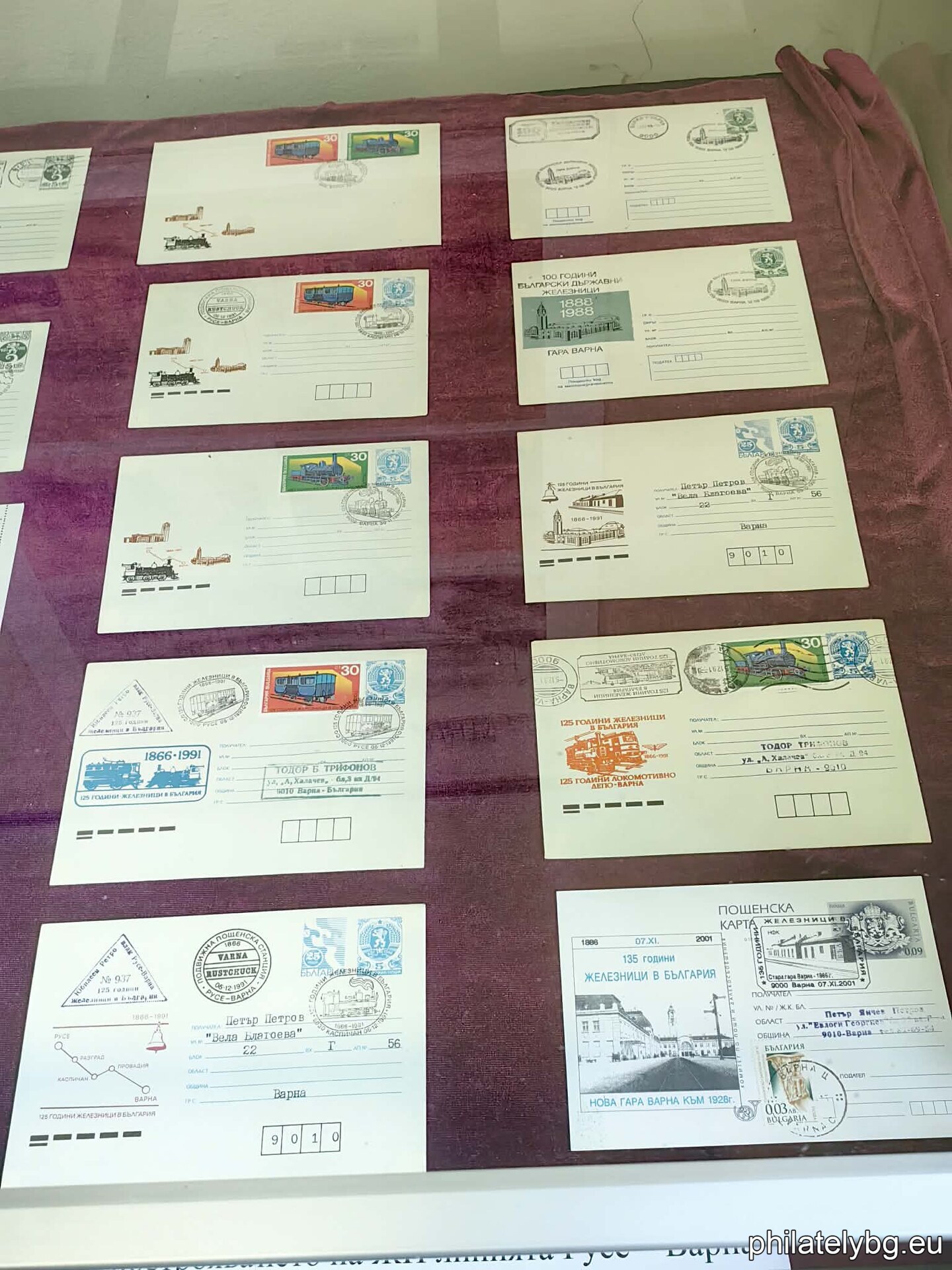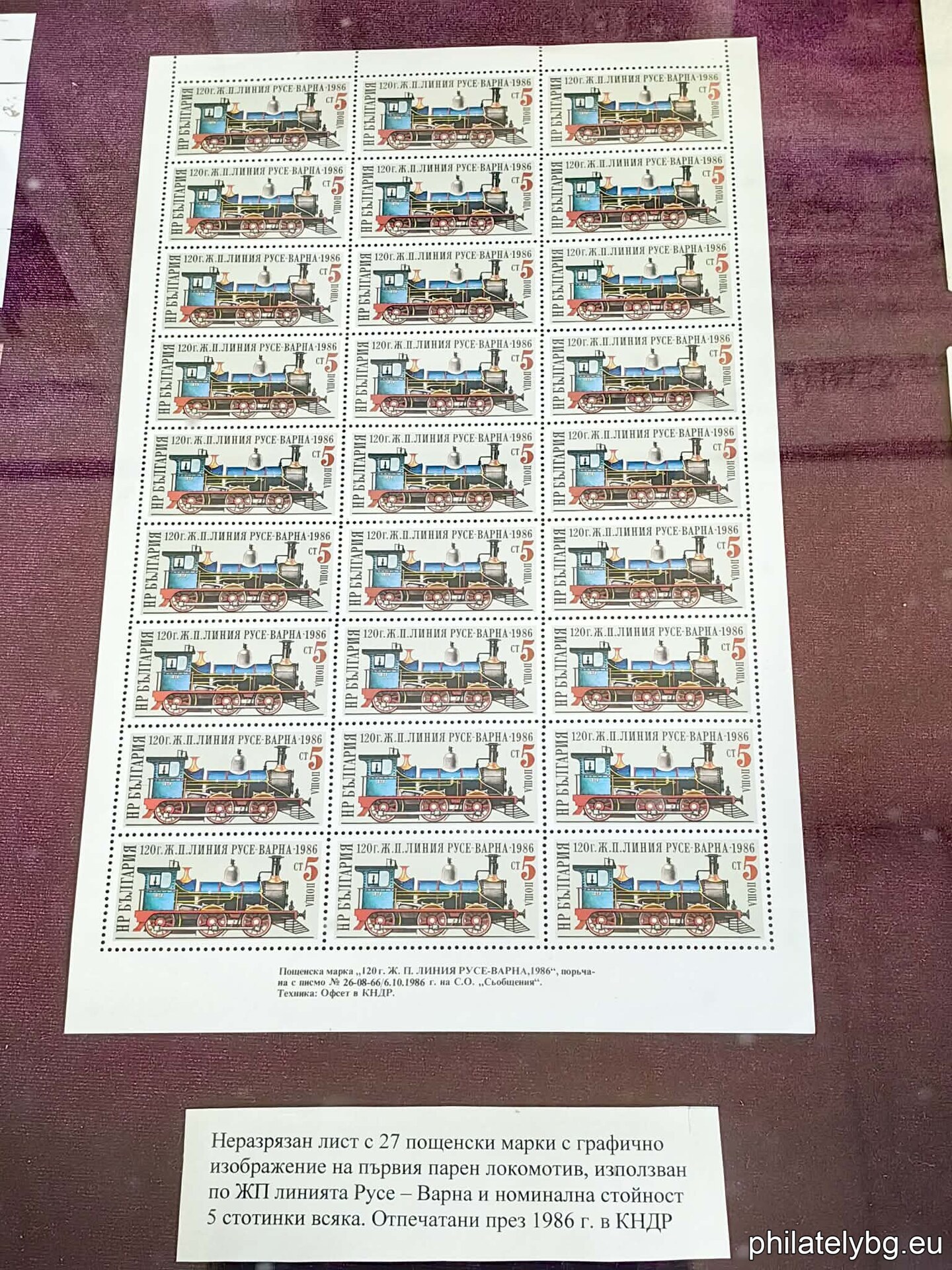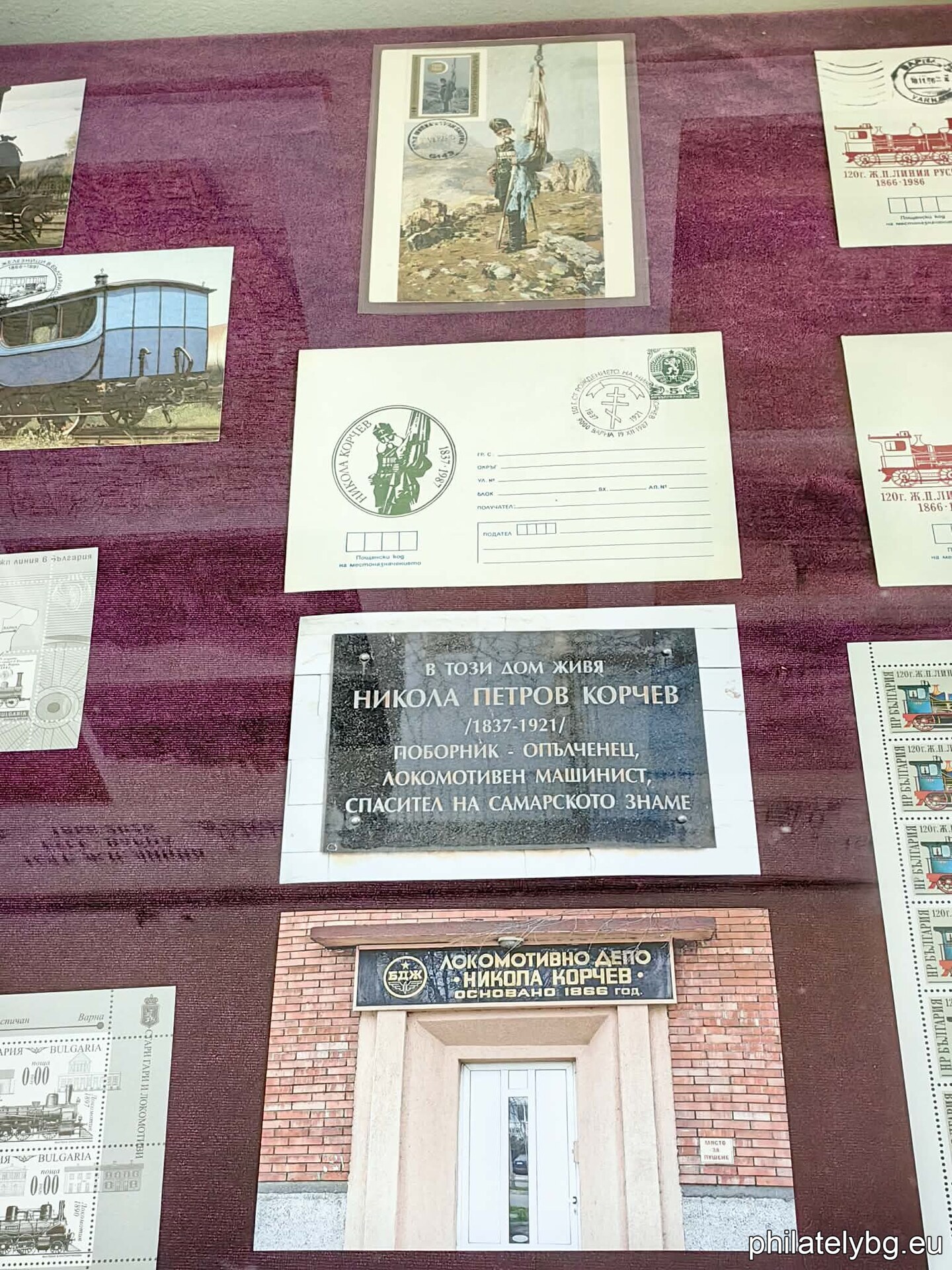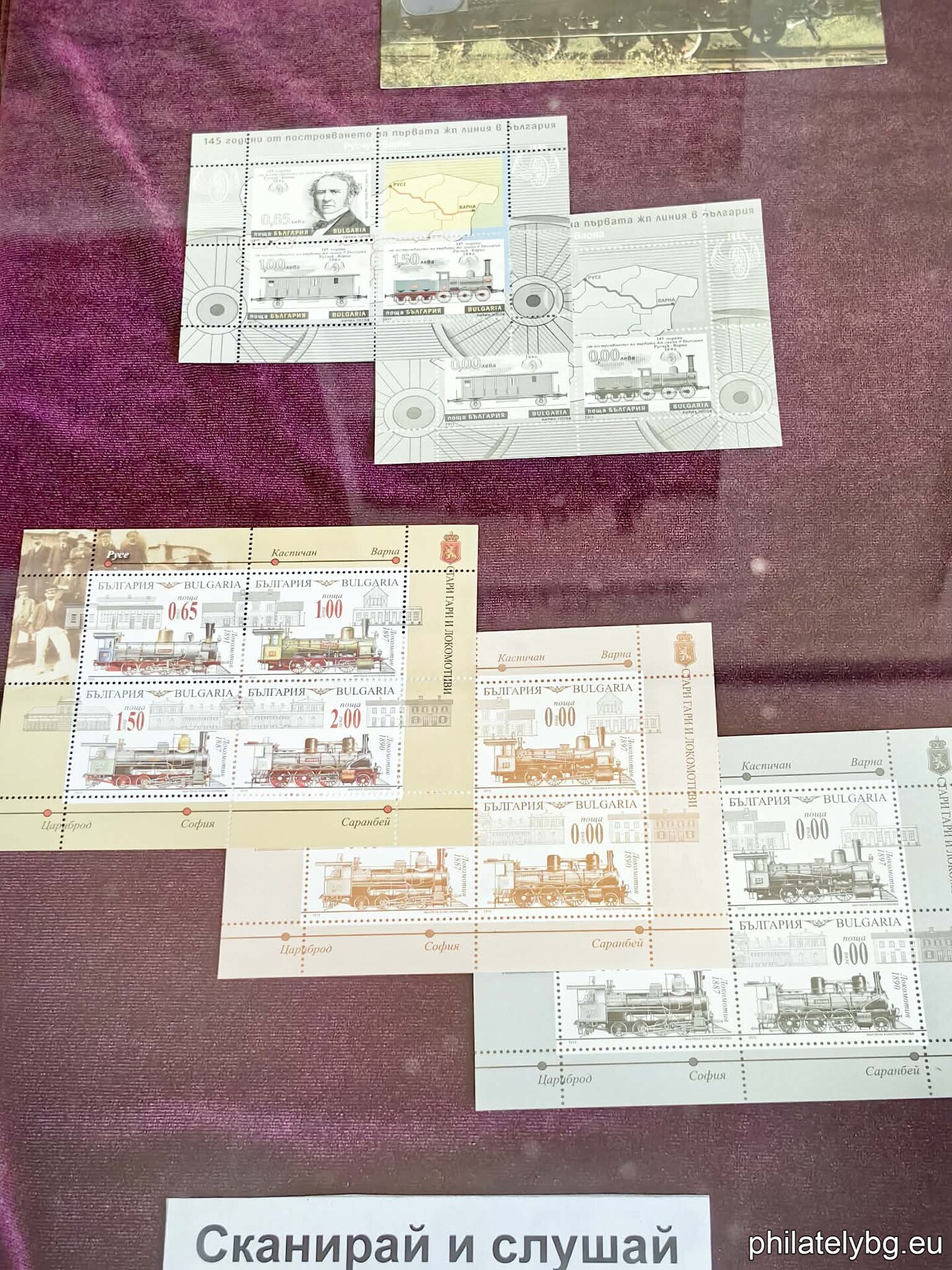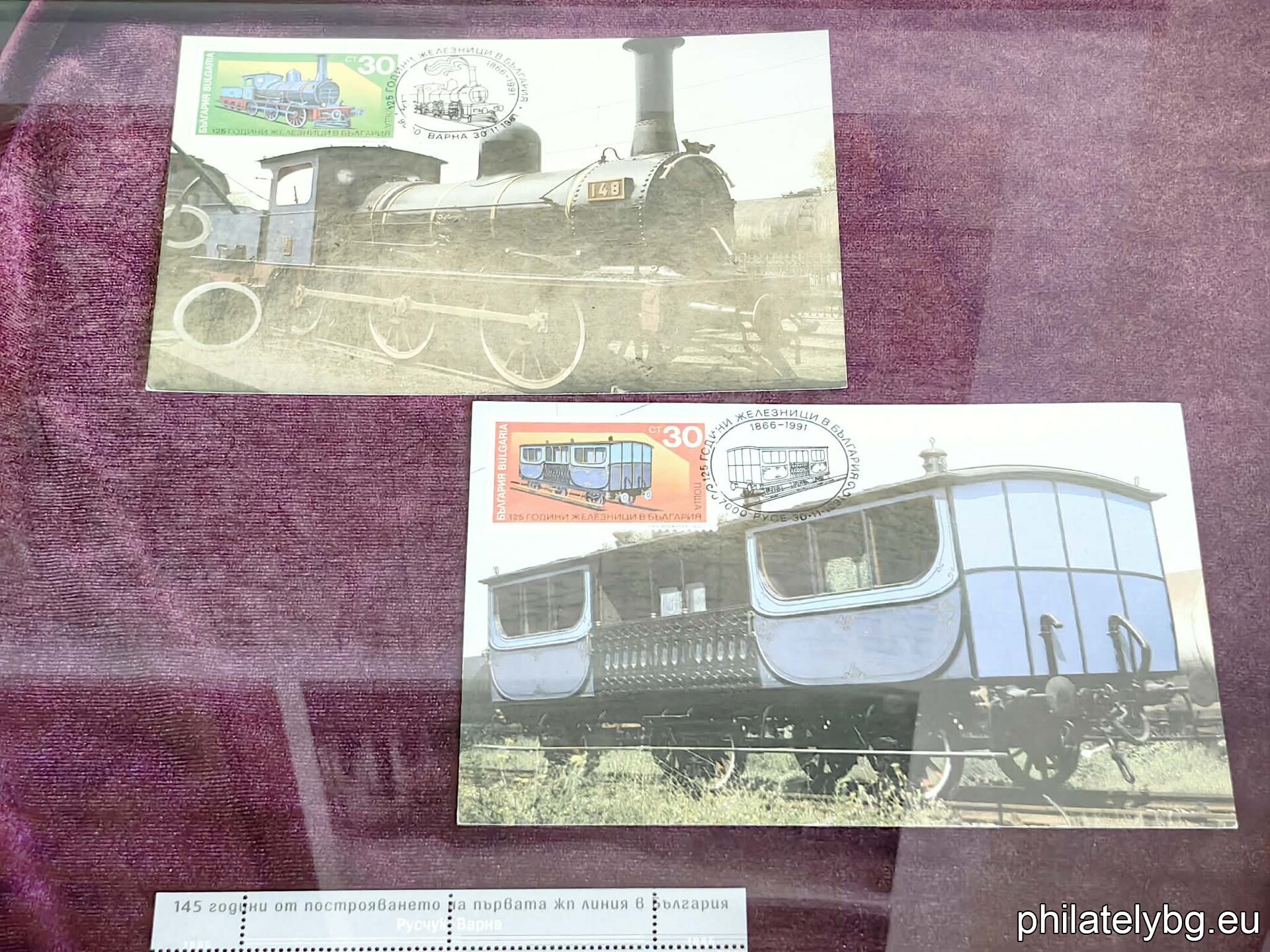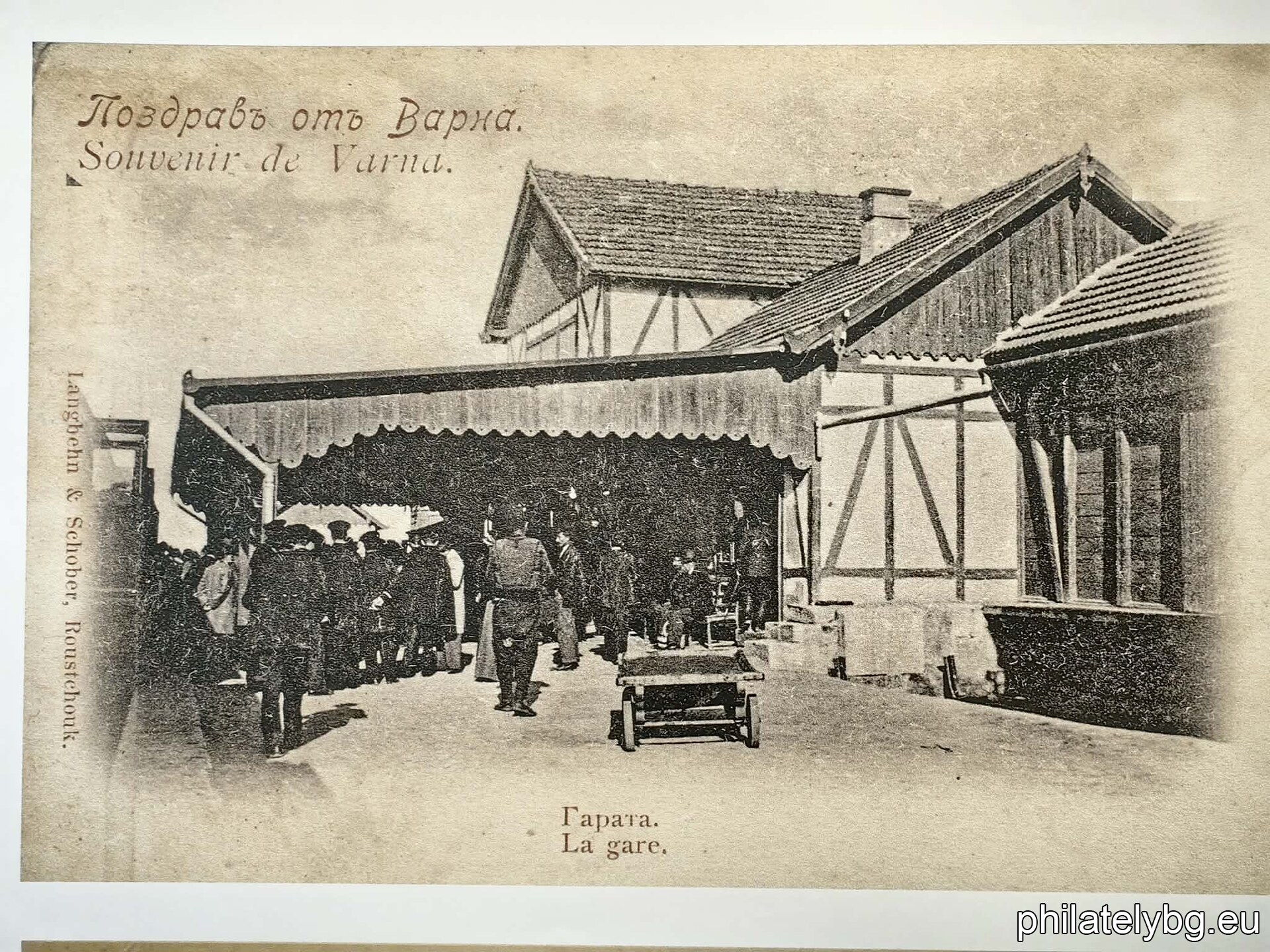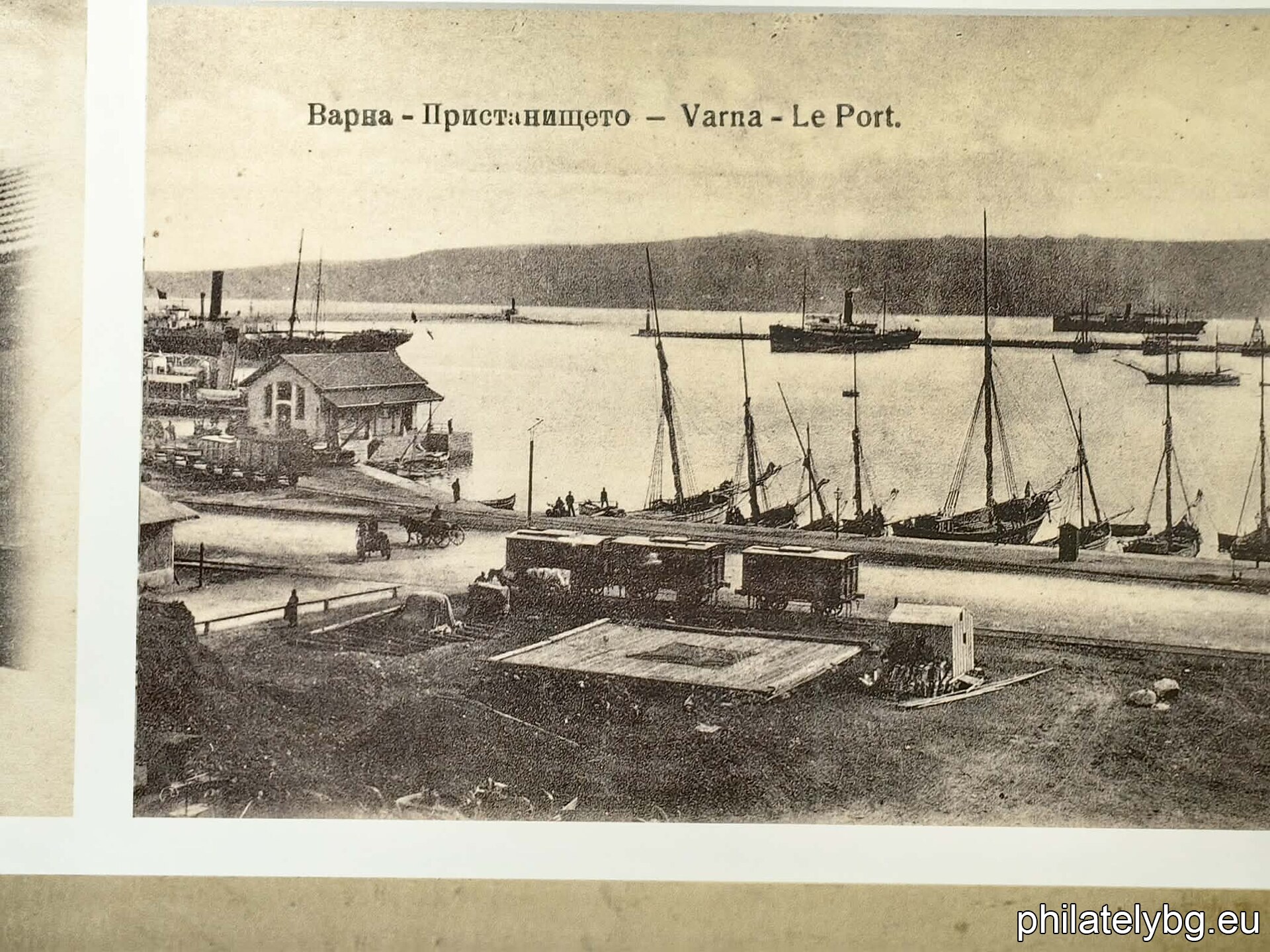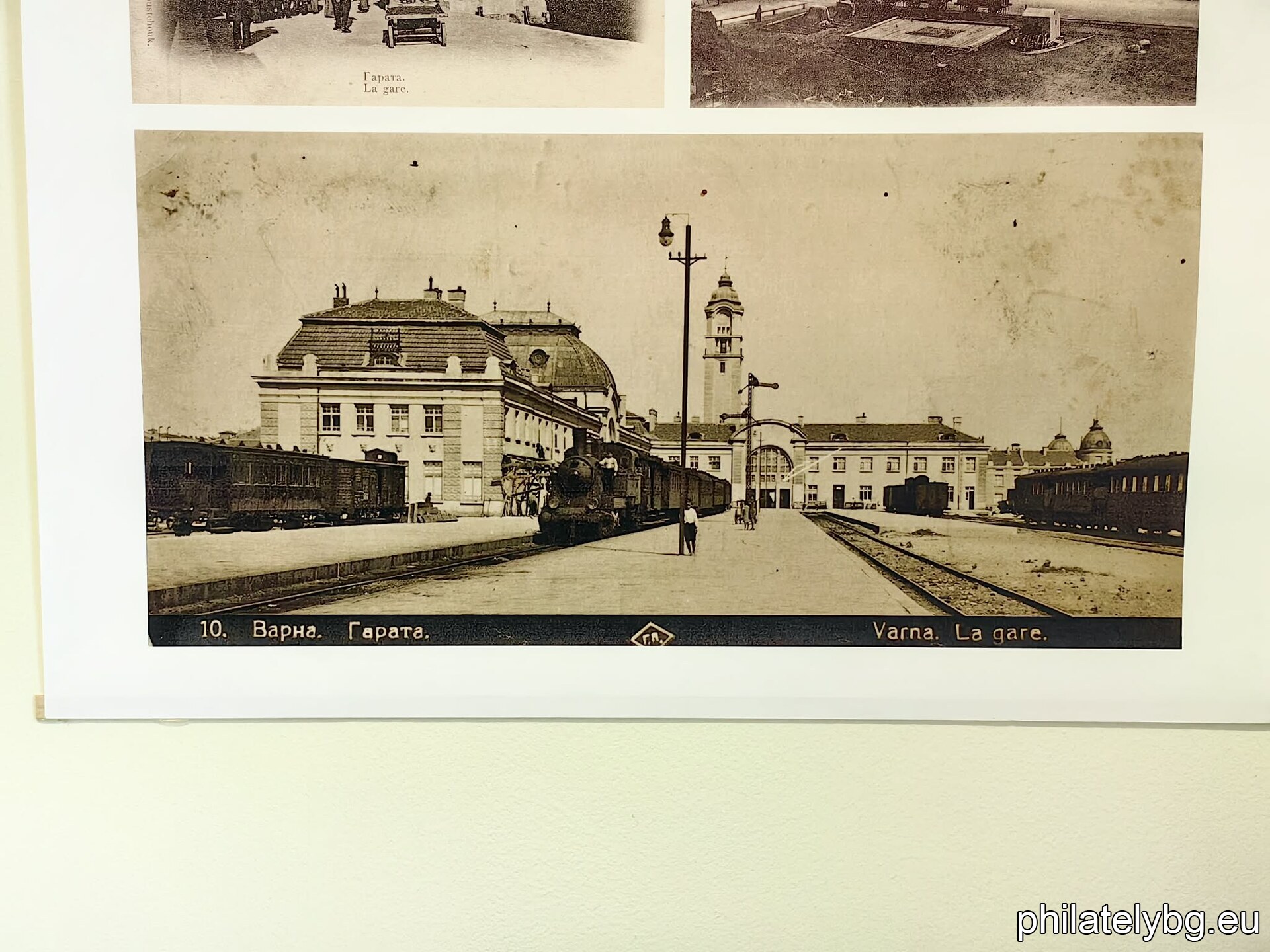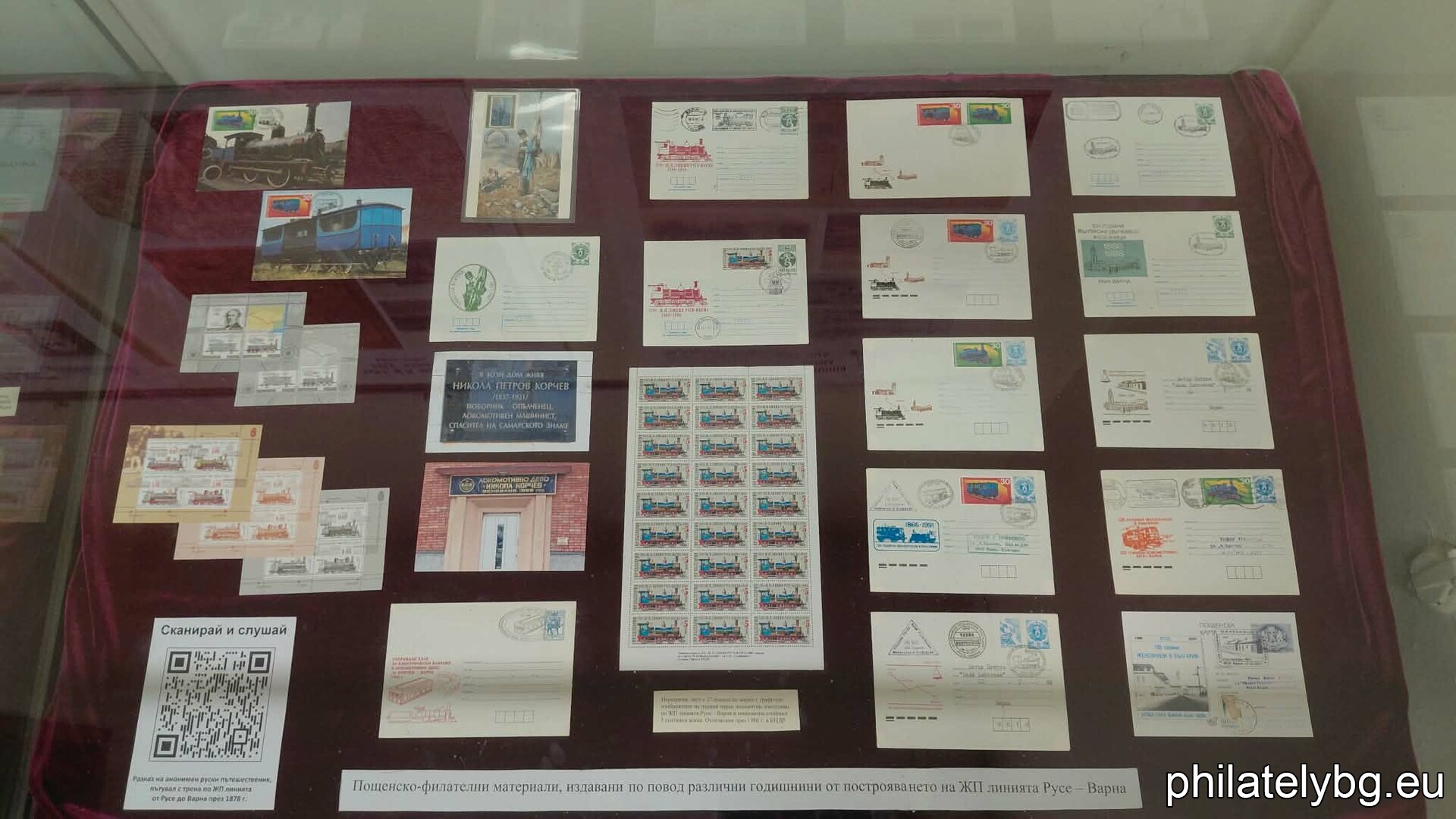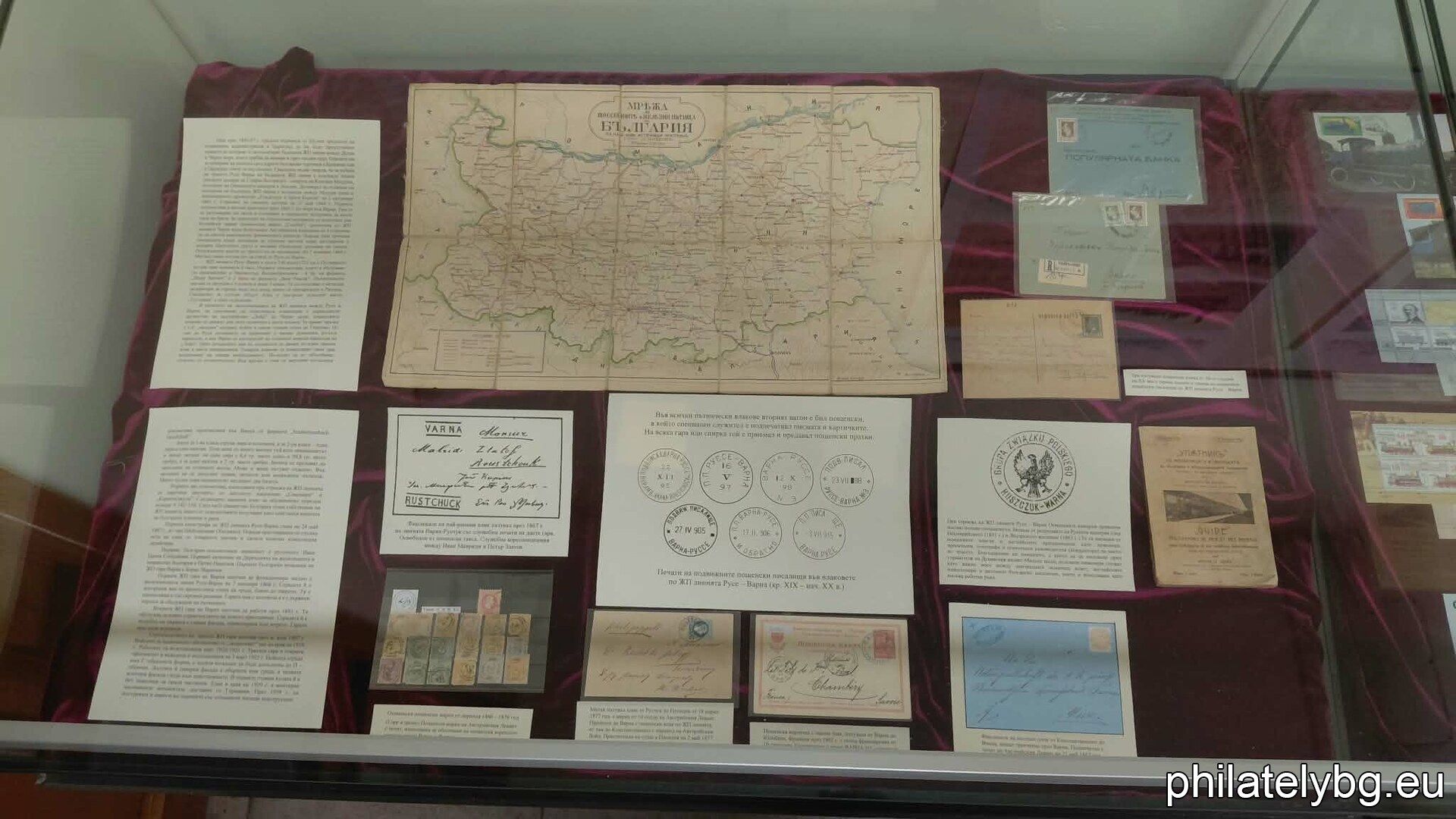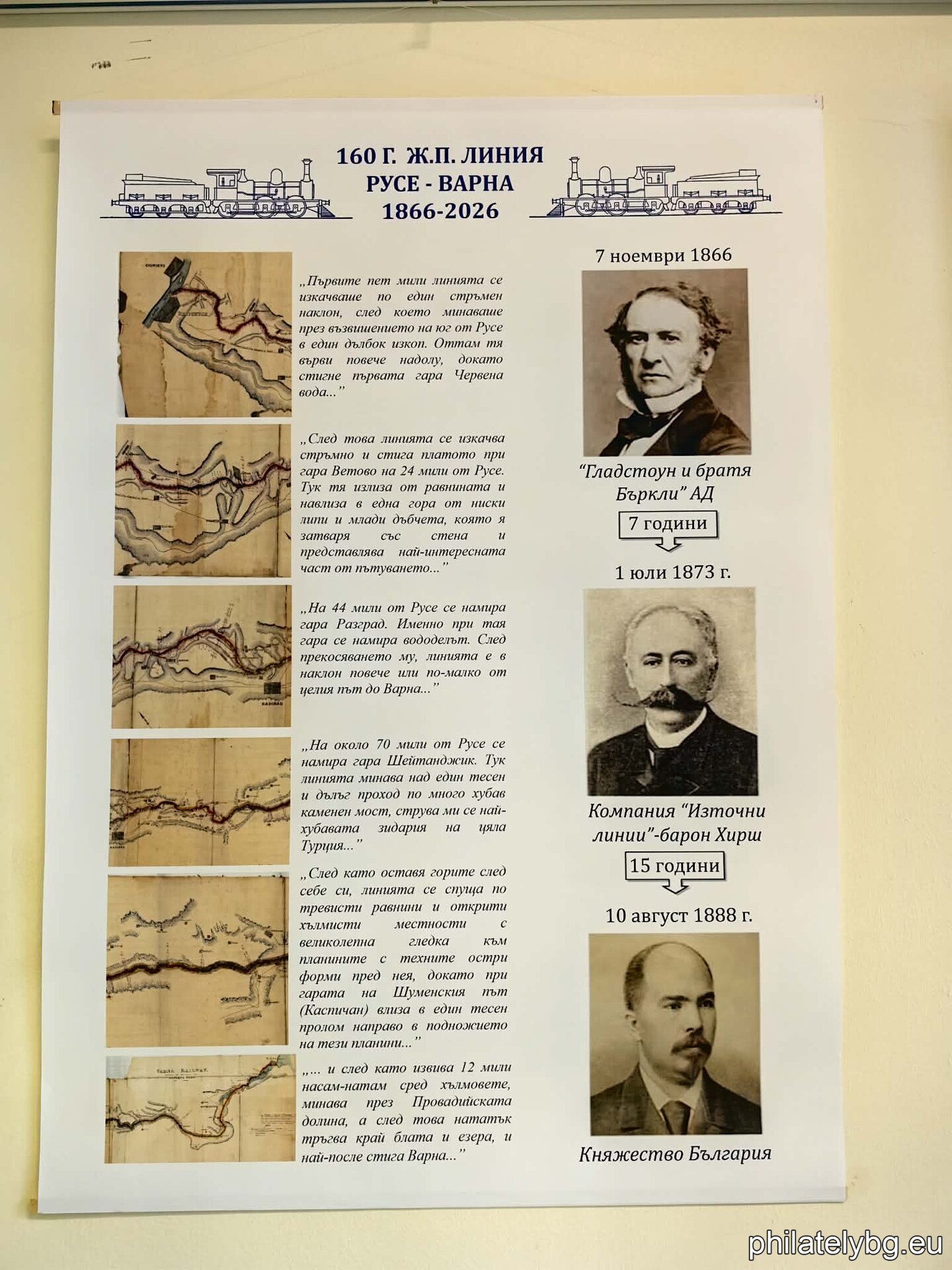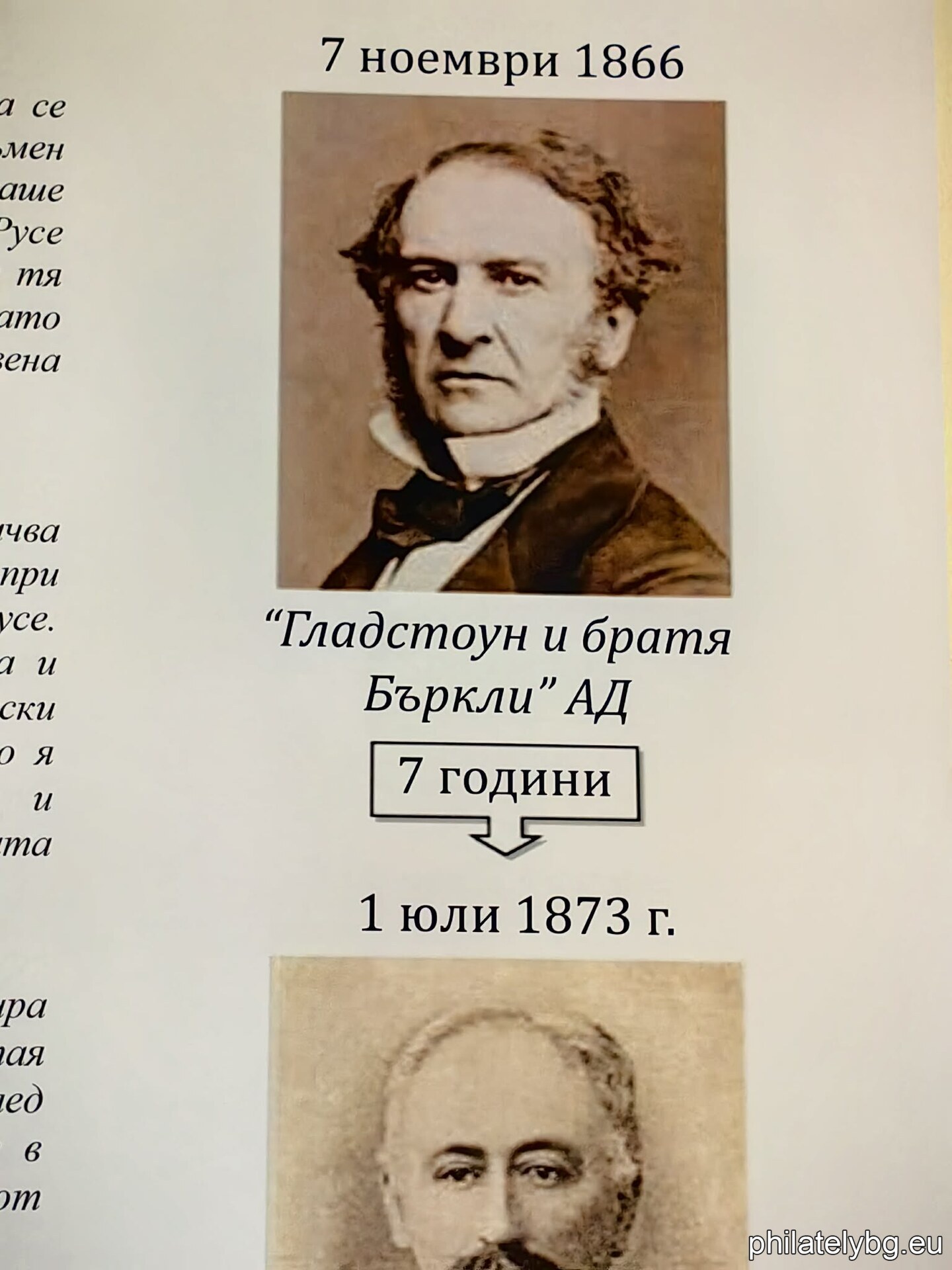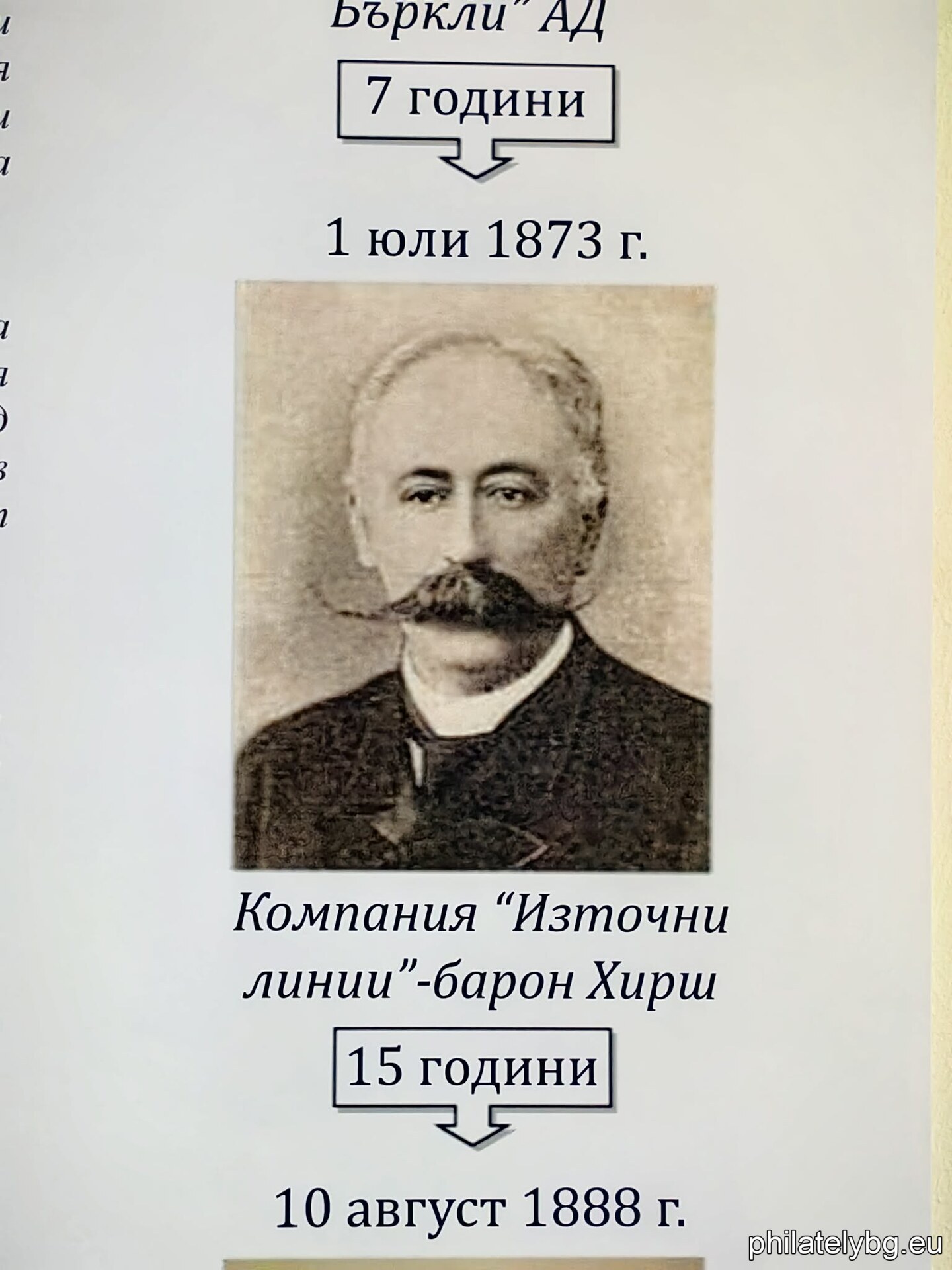

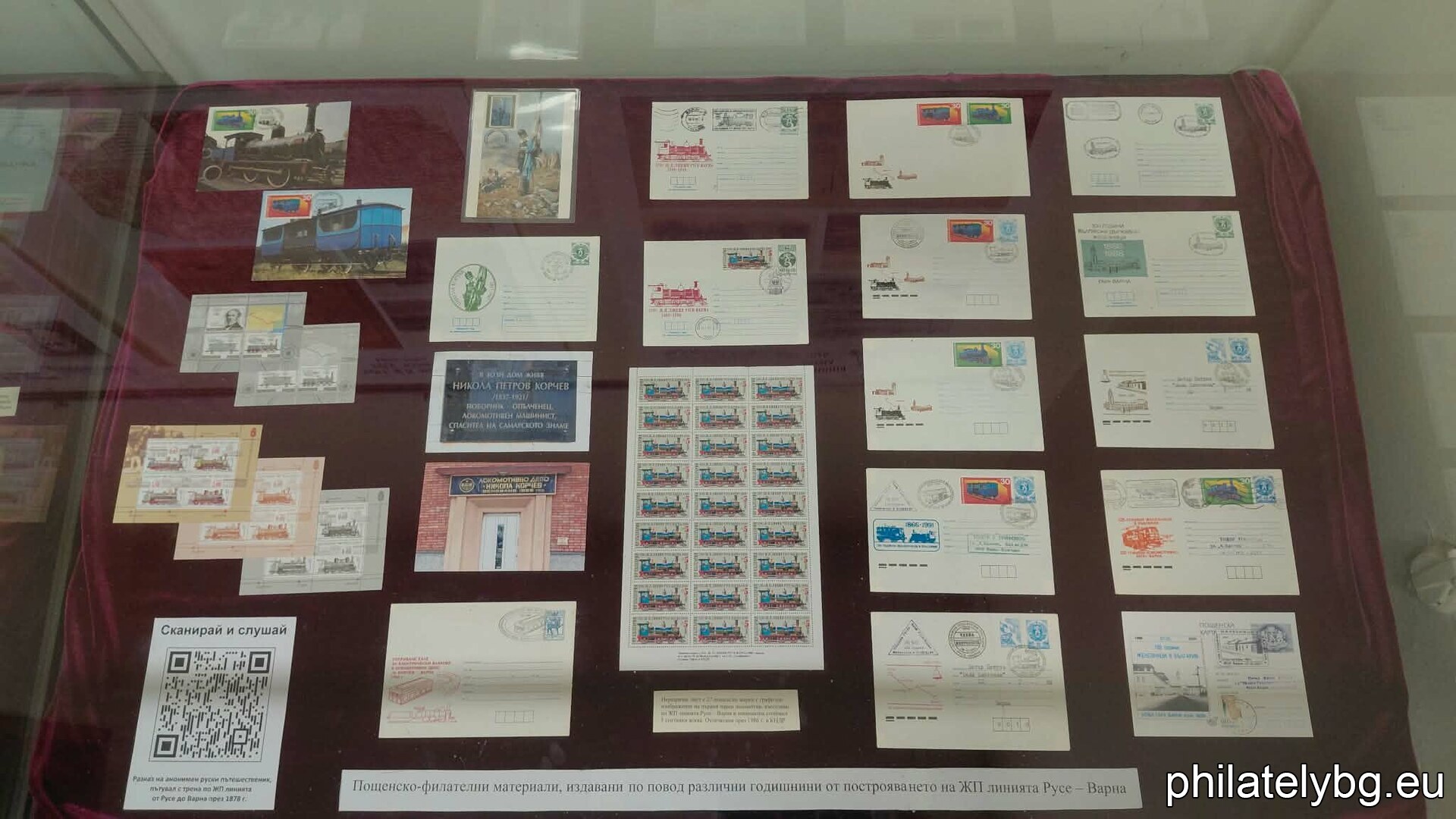
 On the occasion of the 160th anniversary of the opening of the Ruse–Varna railway line, the Museum of New History of Varna and the Varna Philatelic Society have organized the exhibition “From Ruschuk to Varna by Train. 160 Years Later.” The exhibition traces the history of the first railway line in the Bulgarian lands while placing special emphasis on its importance for the development of postal communications and the preservation of historical memory through philately.
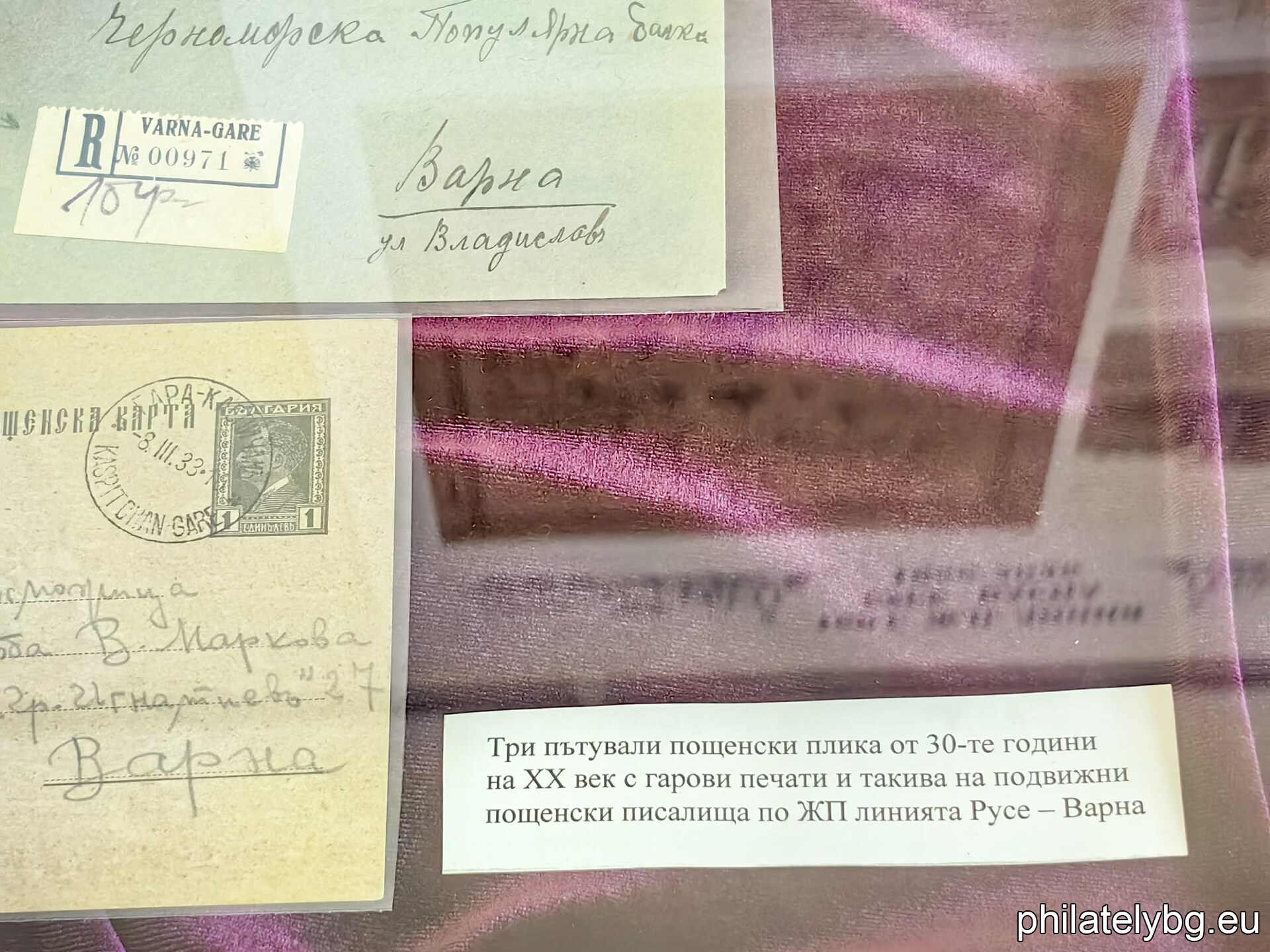
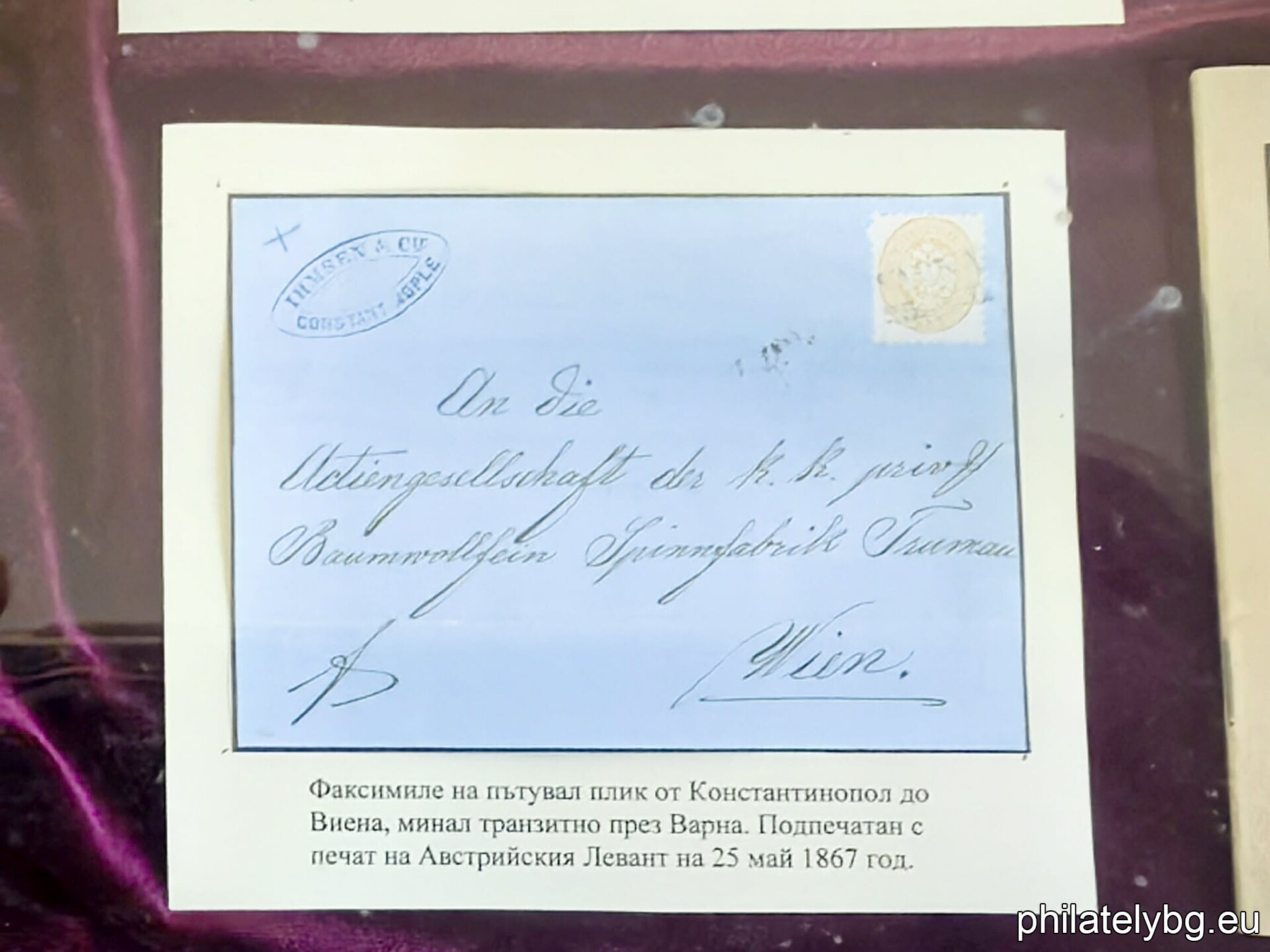
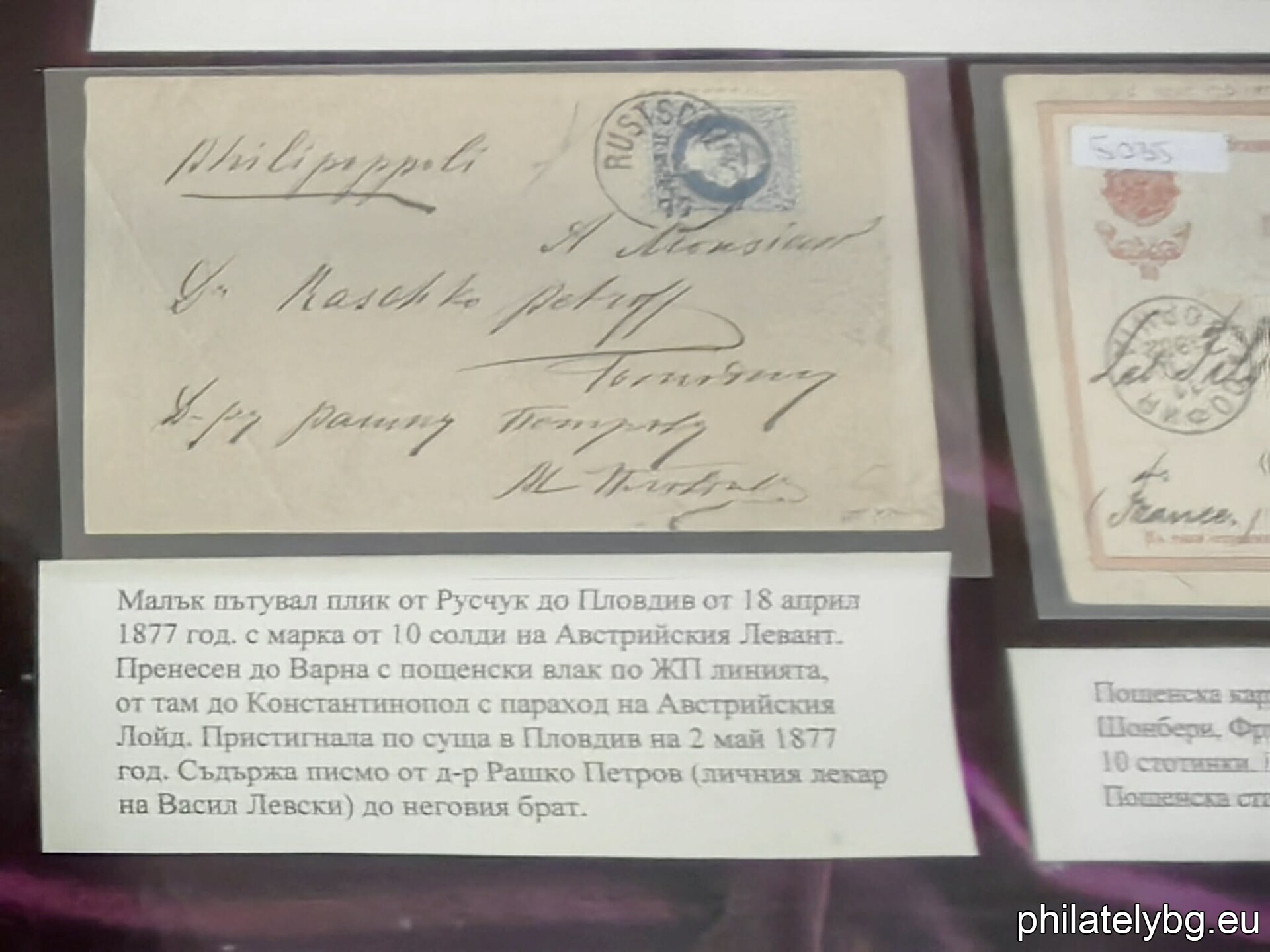
Among the most valuable exhibits are postage stamps, first day covers, postal stationery, and rare postal documents illustrating how the railway transformed the exchange of correspondence between the Orient and Europe. Visitors have the opportunity to view reproductions of some of the earliest postal items carried along the Ruschuk–Varna route, turning the exhibition into a fascinating journey through the evolution of postal communications during the second half of the nineteenth century.
A particularly significant contribution to the exhibition comes from the Varna Philatelic Society, whose Chairman, Nikolay Penev, plays a leading role in presenting the philatelic section of the display. He emphasizes that the railway line was not merely a transportation project of enormous economic importance, but also a key factor in accelerating postal communications and improving connections between Europe and the Ottoman Empire. Thanks to developments such as these, philatelic material today serves as an invaluable source for understanding historical events and human stories that are often absent from traditional archives.
Among the most remarkable items presented by the Varna philatelists are covers and postal documents dating from the period before the establishment of the Bulgarian postal service and the issuance of the first Bulgarian stamps. Of particular interest are postal items that traveled along the Constantinople–Varna–Ruschuk–Vienna route, as well as correspondence reflecting the dramatic events surrounding the Liberation of Bulgaria. These exceptional postal witnesses demonstrate how closely postal history is intertwined with the political and social developments of its time.
According to Nikolay Penev, philately is a unique historical archive in which every stamp, postmark, and cover preserves a fragment of the past. This philosophy is reflected throughout the exhibition, which highlights not only the development of railways but also their impact on communication, commerce, and everyday life. Through the exhibited material, visitors can discover how a railway line became a vital link connecting cities, countries, and cultures.
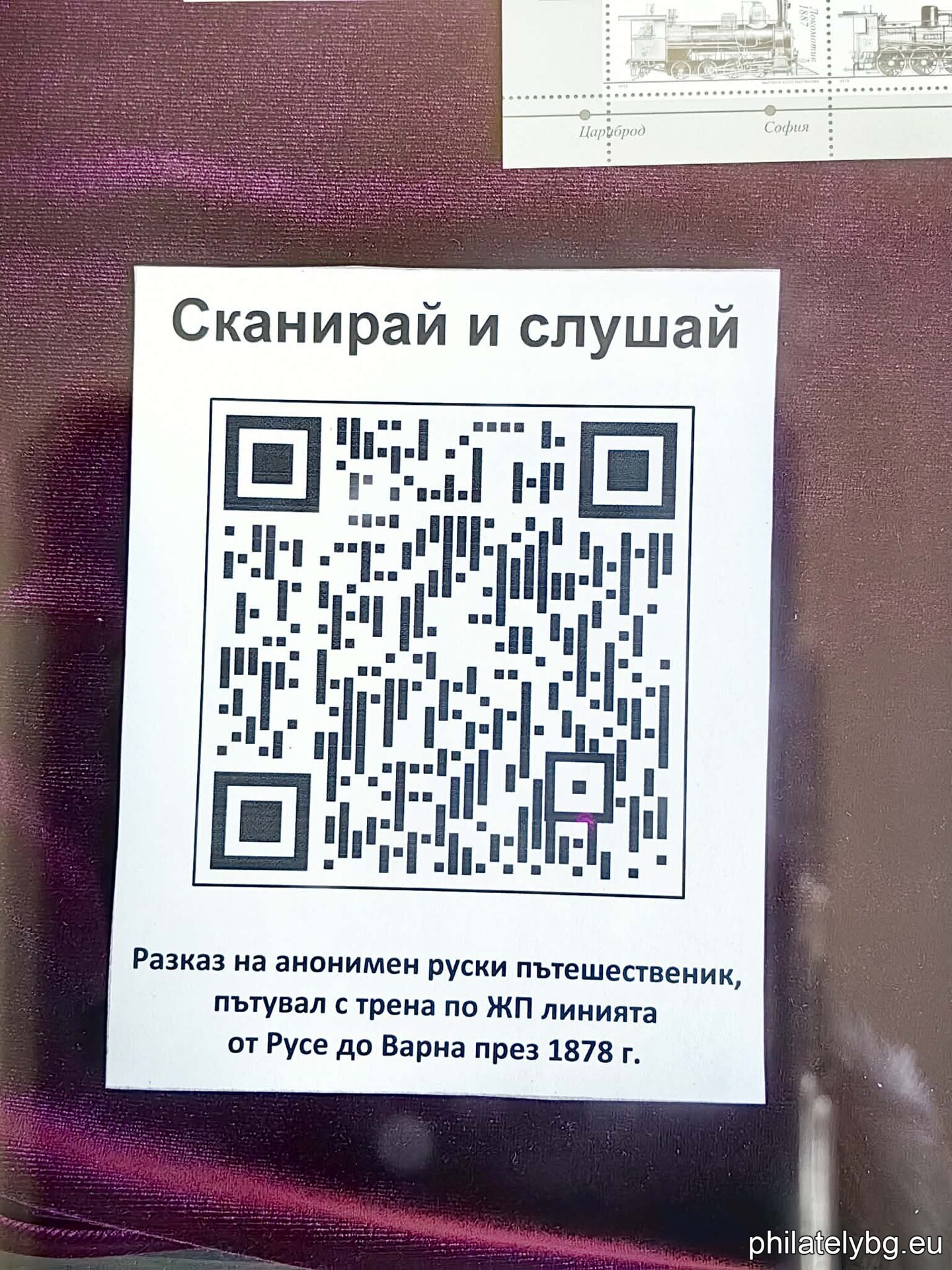
The exhibition successfully combines history, philately, and modern technology. Alongside authentic documents and rare postal artifacts, visitors can listen to an audio narrative generated with the assistance of artificial intelligence, based on the memoirs of a Russian traveler who journeyed from Ruse to Varna in 1878. In this way, the exhibition offers an engaging and immersive journey through time, while showcasing the important contribution of the Varna Philatelic Society and its Chairman, Nikolay Penev, to the preservation and promotion of Bulgaria’s postal and philatelic heritage.