

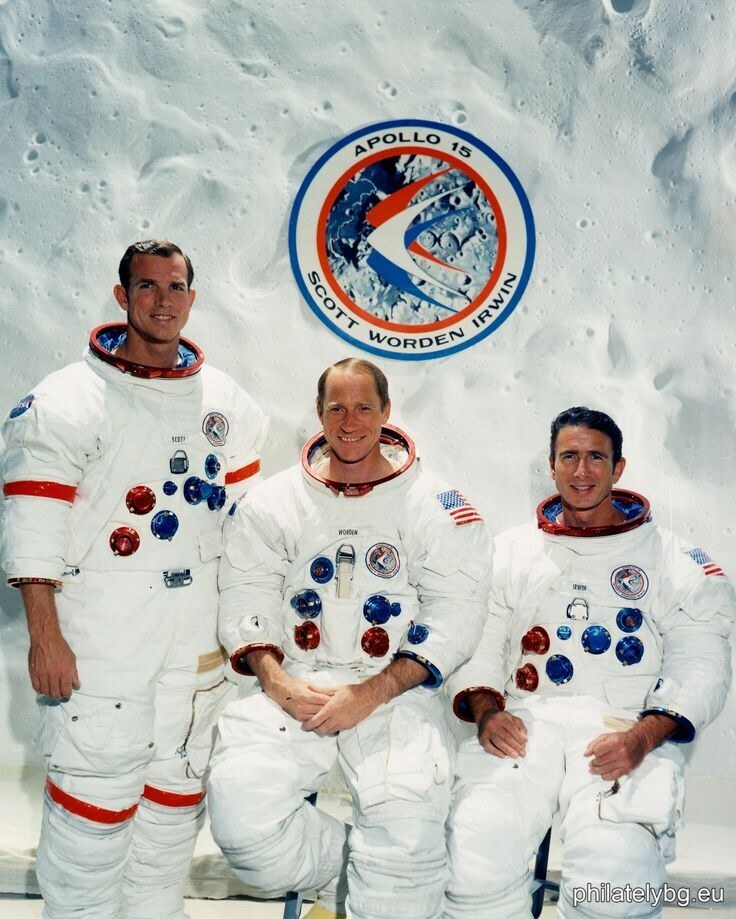
 In 1971 the crew of Apollo 15 took hundreds of postal covers that were not on the approved list, and some of them reached collectors. The story of the scandal, the punishments, and the question of what may be carried into space.
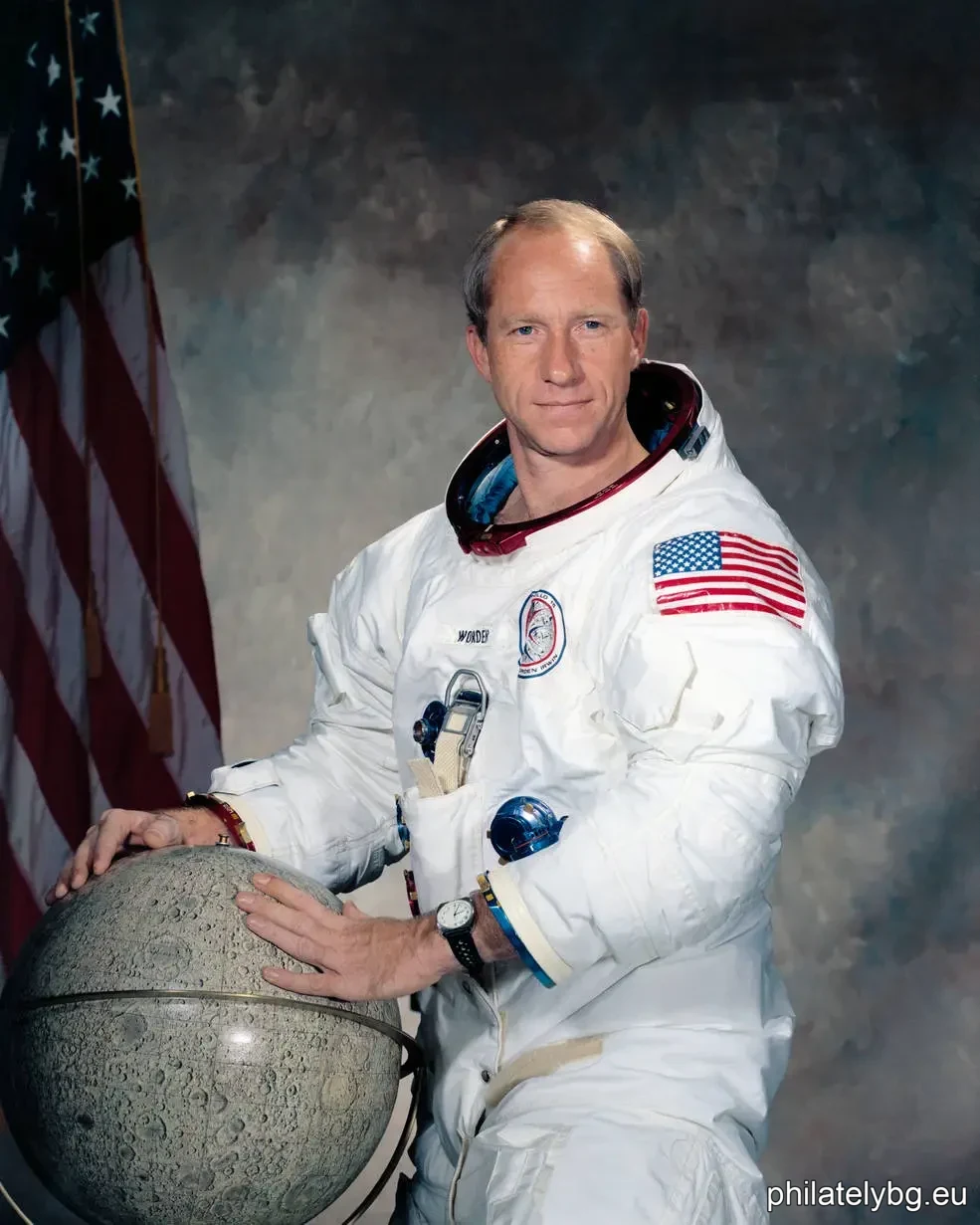
On 26 July 1971 Apollo 15 set off for the Moon with Commander David Scott, Command Module Pilot Alfred Worden and Lunar Module Pilot James Irwin. In a pocket of Scott’s spacesuit was a packet of about 400 thin postal covers, each with a stamp and postmark, which were not entered in the list of personal items approved before the flight. The covers reached the lunar surface in the lunar module Falcon and returned to Earth. In 1972 the story became a scandal that reached a closed session of the United States Senate. The newspapers of the time wrote that the astronauts had carried them secretly, but the facts about the sales are more complicated. One hundred of the covers were handed to an intermediary and were sold by the German stamp dealer Hermann Sieger. The remaining roughly 300 the astronauts kept for themselves and did not sell – NASA seized them. This publication therefore relies on the documents: NASA’s press release of 15 September 1972, the record of the closed Senate session of 3 August 1972, and contemporary newspapers. Where the sources disagree, or where there is only supposition, this is stated plainly.
The context is the time when space philately was at the height of its popularity. Collectors sought covers that had been carried in space or postmarked on launch day, and astronauts were used to taking part in the making of such souvenirs. Before each flight they drew up a list of personal items they would carry, and it was approved. For Apollo 15, NASA later acknowledged 243 covers as “authorized and listed”, among them two covers of the United States Postal Service, a 1928 cover autographed by Orville Wright, and 144 covers carried by Worden. Of these, 100 bore a moon-phase design and were prepared with the help of the philatelist F. Herrick, who advised Worden to keep the covers for their future value to collectors. Trading was a different matter. According to the Senate record, a letter from Deputy Administrator George Low to Senator Clinton Anderson reports that several astronauts had accepted money for signing sheets of stamps from Horst Walter Eiermann, who was also connected with the Apollo 15 covers. Those sheets were not carried into space, but NASA notified the Department of Justice.
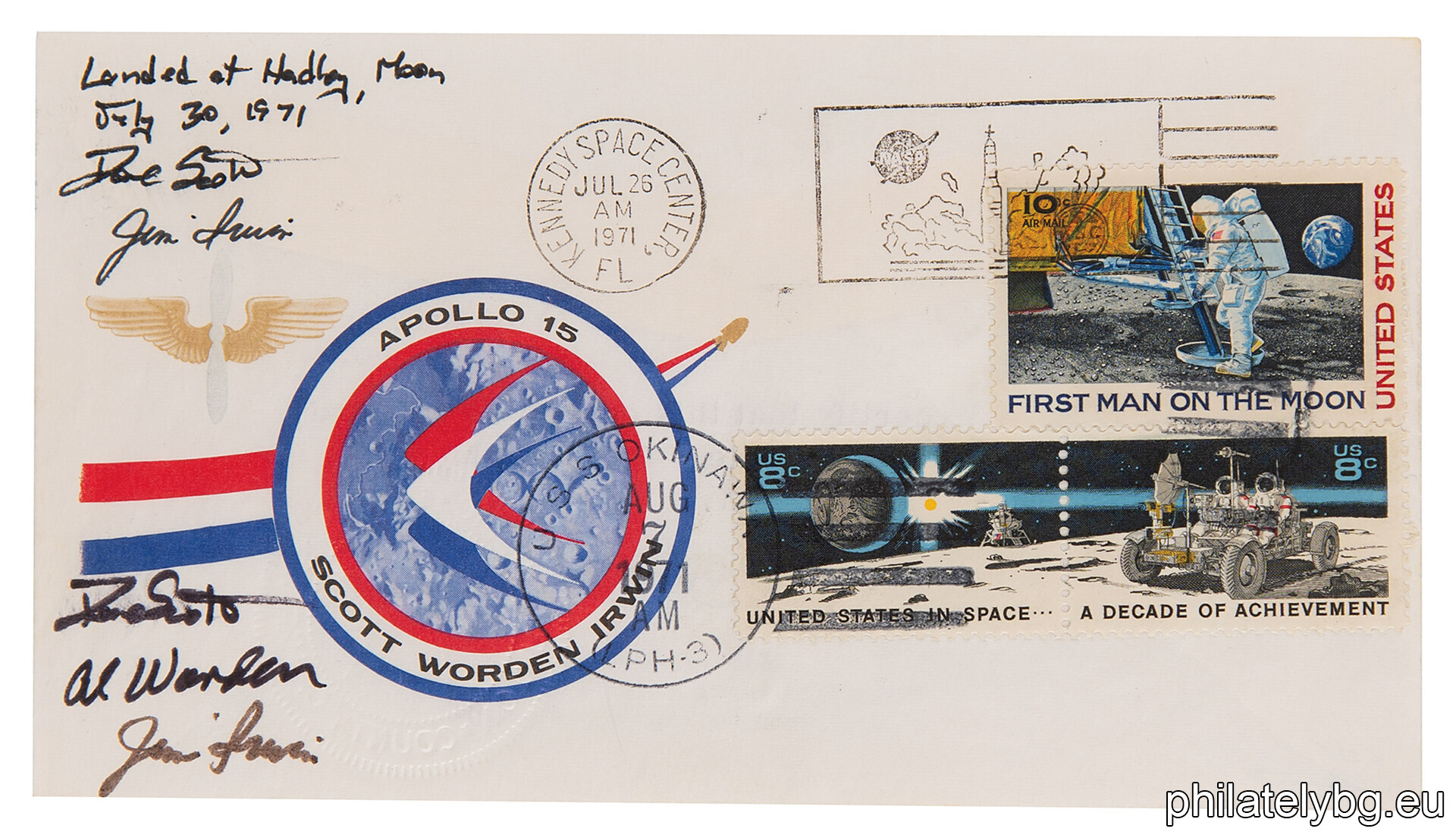 The scheme began with two men from outside NASA. According to NASA’s press release, Hermann E. Sieger of Lorch, Germany, a major European stamp dealer, met H. Walter Eiermann on a visit to Cape Kennedy in 1970 (according to Wikipedia, the two met by chance on a bus to the Apollo 12 launch in late 1969). Eiermann was a naturalized American who had worked in the Cape Kennedy area for years and knew many astronauts. In early 1971 Sieger concluded that covers carried to the Moon would have great commercial value. In the spring of 1971, during Apollo 15 training, Eiermann proposed to Scott, and then to Worden and Irwin, that they carry 100 special covers for him. The offer was about $7,000 for each of them, in the form of savings accounts. The astronauts agreed and decided to take about 300 more covers for personal use – NASA later counted 298. According to the astronauts themselves, the covers were not to be used commercially until the end of the Apollo programme. Wikipedia, which relies on later books and testimony, also notes a dispute about where the proposal was made. Scott writes that a dinner at Eiermann’s home was arranged by the head of the astronauts, Deke Slayton, while Worden mentions only an invitation from Scott. Before the Senate in 1972, Scott said that he had met Eiermann at a party.
The covers were prepared on launch day. NASA reports that each cover bore a ten-cent “First Man on the Moon” stamp and was postmarked early on 26 July 1971 at the post office of the Kennedy Space Center. The covers were light, with a copy of the mission emblem and an overprinted Air Force symbol. They were not on Scott’s list of personal items. According to Wikipedia, the flight-support crew member James Smotherman later claimed that he had “goofed” and mixed up these 400 covers with Herrick’s approved covers – this is his claim, not an established fact. Scott carried the packet in a pocket of his spacesuit and, according to Wikipedia, the covers weighed about 850 grams. According to Wikipedia, Scott later admitted that this was a violation of the rules, but did not remember how the covers had reached the lunar module. Apollo 15 landed on the Moon on 30 July, and the covers stayed in Falcon until 2 August (per Wikipedia). The spacecraft splashed down in the Pacific on 7 August 1971. On board the recovery ship Okinawa the astronauts affixed two eight-cent stamps to each cover and the ship’s post office postmarked them. They then signed them during the flight from Hawaii to Houston.
Scott mailed the covers to Eiermann in Stuttgart on 2 September 1971, after on 31 August a notarized certificate had been typed on the back of 100 of them, stating that they had been in Falcon in the Hadley–Apennine region. Eiermann gave them to Sieger. By November 1971, 99 of them had been sold, at an average of $1,500 each. In a West German collectors’ magazine they were advertised at 4,850 German marks each. According to newspaper figures cited in the Senate record, the total was about $150,000. According to Wikipedia, Sieger signed and numbered each cover. Separately, NASA also examined Worden’s 144 approved covers: Herrick says that he personally sold three, sent several to Europe, and sold ten through a dealer on commission, receiving about $7,175. NASA found no evidence that Worden was to receive money from these sales.
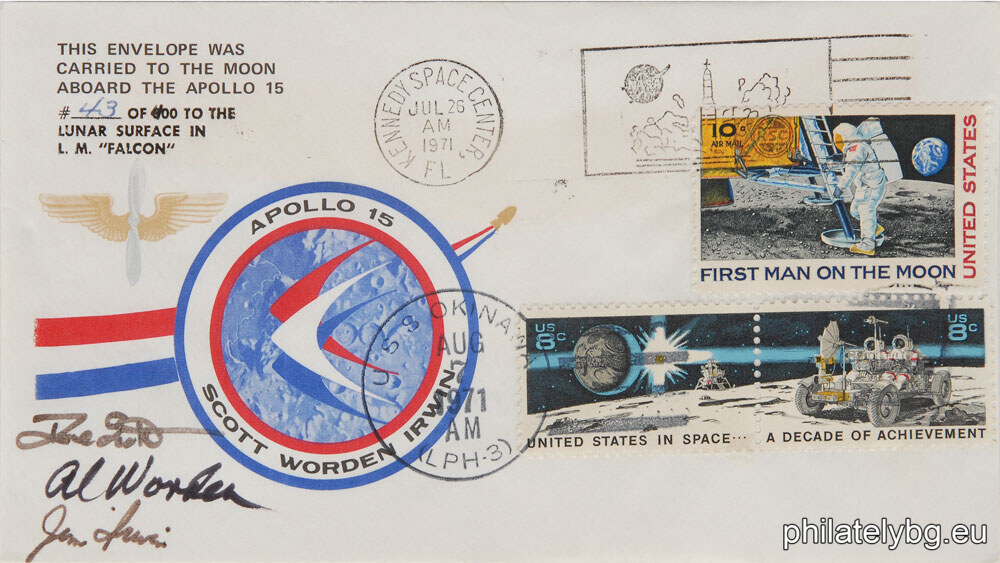 The discovery came gradually. In November 1971 the astronauts learned, on a trip to Europe, that the covers were being sold, and according to NASA, Scott telephoned Eiermann to stop the sales and return the covers. In February 1972 they refused the money. NASA reports that Eiermann had opened a $7,000 account for each of them in a German bank and Scott arranged for it to be returned. The proposal that they receive an album of stamps for their families instead was first accepted and then rejected in April 1972. The sources describe this part differently: NASA’s press release speaks of accounts that the astronauts refused, while some later sources write that they “returned” money they had received. According to Wikipedia, which draws on Slayton’s memoirs, on 5 November 1971 he warned Worden to stop trading in Herrick’s covers, and on 11 March 1972 a letter from Lester Winick to NASA’s general counsel raised questions about the Sieger covers. After speaking with Worden and Irwin, and in mid-April with Scott, Slayton removed the three from the Apollo 17 backup crew. According to Wikipedia he did not inform Fletcher, Low and Kraft; what he knew and when is disputed (see below).
The scandal became public in June 1972. According to Wikipedia, the story was first published in the Washington Sunday Star on 18 June, and on 29 June George Low ordered a full investigation. On 11 July 1972 NASA announced publicly that the astronauts had carried 400 unauthorized covers in addition to 232 authorized ones and that they had shown “poor judgment”. According to the Associated Press, these covers could have been sold to collectors for $600,000 or more. The agency’s position was quoted in the newspapers of the time as follows: the crew had shown poor judgment and the three would be reprimanded, and their actions would be taken into account in future assignments. A NASA spokesman quoted by UPI described the reprimand as “damaging” and said that he did not think the three would fly again. Irwin had already announced that he was retiring from 1 August to head a religious organization. Scott and Worden were at that moment not assigned to any mission. According to the same newspapers, NASA estimated that 300 unsold covers had been seized in Houston.
On 3 August 1972 the Senate Committee on Aeronautical and Space Sciences held a closed session in a Senate building. Senator Clinton Anderson presided. Senators Symington, Cannon, Curtis, Smith, Goldwater and Weicker were also present. The session lasted about five hours and the witnesses were not sworn. Those who spoke were Administrator James Fletcher, his deputy George Low, Deke Slayton, Christopher Kraft and the three astronauts. Anderson stated in conclusion that the testimony was “forthright and complete”, that the question of whether laws had been violated “is being examined”, and that the committee had reached no conclusions. According to Fletcher’s words as quoted by the press, there was “no doubt” that NASA’s rules on employee conduct had been violated. The record also notes the remarks of the Department of Justice, which took a “substantial interest” in the case and asked that Fletcher’s report of 27 July be available only to the committee.
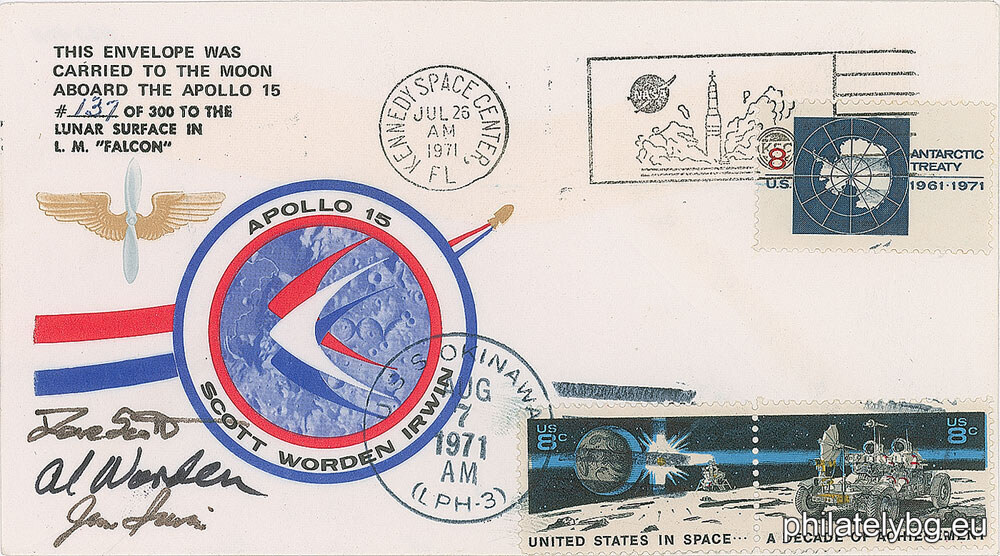 On 15 September 1972 NASA published a detailed report (News Release 72-189). The figures were revised: 641 covers in all, of which 243 were authorized and 398 unauthorized (at first thought to be 400), of which 100 were handed to Eiermann and about 298 remained with the astronauts. The report found violations of regulations, irregularities and poor judgment by the crew, as well as weak communication in part of the management and inadequate administrative procedures. Scott, Worden and Irwin were formally reprimanded, and their military efficiency reports record a finding of lack of judgment – NASA wrote that this carries severe consequences for their careers. The Department of Justice reviewed whether criminal laws had been violated and whether to bring a civil action. The same report dealt with two other cases: the “Fallen Astronaut” sculpture, left on the Moon and later offered for sale in replicas, and two timepieces carried by Scott without permission, to evaluate them for a manufacturer.
The report also introduced new rules – they answer the question of what may be carried into space. Each astronaut may carry no more than 12 personal items, each weighing no more than half a pound, and all are approved by the Administrator. Items that could be exploited commercially by recipients are prohibited. The list of items carried is announced publicly no later than 30 days after the flight. Future flights also carry an official flight kit – flags, emblems, medallions – whose contents are approved and announced before the flight and whose commercial use is likewise prohibited. Today NASA’s rule 14 CFR §1214.602 applies: every memento must be approved and is stowed only in an official or personal kit, may not be sold, transferred for sale or used for personal gain, and philatelic materials and coins are not approved for flight, because by their nature they may be exploited by recipients or create problems with respect to good taste.
The consequences for the three were different. None of the crew flew in space again. Irwin left NASA in 1972. According to Wikipedia, Scott was technical adviser on the Apollo–Soyuz project, retired from the Air Force in 1975 and left NASA in October 1977, while Worden was transferred to the Ames Research Center and retired in 1975. The Department of Justice, according to the same source, declined to prosecute in 1974. In February 1983 Worden sued the government, claiming that the seizure of the covers without a hearing had violated the Constitution. According to postal and collectors’ sources, the astronauts cited the plan of NASA and the United States Postal Service to send about 260,000 covers aboard the space shuttle STS-8. The dispute was settled out of court and in July 1983 the covers were returned; Wikipedia reports 359 covers in all (298 covers of the crew and 61 of Worden). Notarized certificates dated 19 July 1983, signed by the three, accompany specimens sold later. A Sieger cover sold for over $50,000 in 2014, and a cover from Scott’s collection for $15,000 in 2008.
 Some things remain unproven, and it is only honest to say so plainly. Whether Slayton knew of the plans before the flight is supposition. A Chicago Sun-Times journalist, cited by Wikipedia, considers it “ludicrous” that he did not know, but this is an opinion, not a document. According to Wikipedia, the government’s position in 1983 was that NASA either approved the covers or knew of them, but this too is disputed. Scott’s motive is also supposition – he says the money was for a trust fund for the children, but this is his explanation, given later. How the covers reached the lunar module is not known – the accounts of the three differ. It is also unclear whether Sieger knew that the sale was prohibited. The number of covers varies according to the document: 232 or 243 authorized, 398 or 400 unauthorized, 298 or 300 for the astronauts, 632 or 641 in all. The names of the intermediaries are also spelled differently: Hermann or Herman Sieger, Horst Walter or H. Walter Eiermann, and the Senate record also has the variant “Siermann”.
The story leaves a clear boundary: a personal item is allowed if it is approved, light, intended for personal or gift purposes and without commercial value. The scandal is not that a cover flew to the Moon, but that hundreds of such covers were brought along without approval and 100 of them became merchandise. Today the rule is strict. In 1983 the astronauts cited the shuttle covers as an argument for a double standard – this is their position, not an established fact.
People in this publication:
David Scott – commander of Apollo 15; carried the covers in a pocket of his spacesuit, received a reprimand, never flew again, and in 1983 got his covers back.
Alfred Worden – command module pilot; also carried the 144 authorized Herrick covers, received a reprimand, and in 1983 brought the suit for the return of the covers.
James Irwin – lunar module pilot; received a reprimand and left NASA in 1972 to devote himself to religious work.
Horst Walter Eiermann – naturalized American who worked in the Cape Kennedy area; proposed that the astronauts carry covers and passed one hundred of them to Sieger.
Hermann E. Sieger – stamp dealer from Lorch, Germany; sold one hundred covers to collectors at about $1,500 each.
Deke (Donald K.) Slayton – NASA’s director of flight crew operations; removed the three from the Apollo 17 backup crew.
James C. Fletcher – NASA Administrator, who published the report of 15 September 1972 and the new rules.
George M. Low – NASA Deputy Administrator, who ordered the investigation and reprimanded the crew.
Christopher C. Kraft – NASA official from the Houston center, present at the Senate session; according to Wikipedia he questioned Scott in June 1972.
Clinton P. Anderson – senator from New Mexico, chairman of the Senate committee that held the closed session.
F. Herrick – stamp collector from Miami who helped prepare Worden’s 144 authorized covers.
Lester Winick – author of the letter of 11 March 1972 to NASA’s general counsel that raised questions about the Sieger covers (per Wikipedia).
James Smotherman – member of the flight-support crew who later said he had mixed up the covers (per Wikipedia).
Sources:
NASA News Release 72-189, “Articles Carried on Manned Space Flights”, 15 September 1972 – http://www.collectspace.com/resources/flown_a15_articlescarried.html
U.S. Senate Committee on Aeronautical and Space Sciences, closed session, 3 August 1972, “Commercialization of Items Carried by Astronauts” – https://archive.org/details/hrg-1972-asp-0008_from_1_to_406
Chicago Tribune, 12 July 1972, “NASA Reprimands Apollo 15 Crewmen” – https://www.newspapers.com/newspage/377353052/
The Philadelphia Inquirer, July 1972 – https://www.newspapers.com/newspage/180371871/
Philadelphia Daily News (UPI), July 1972 – https://www.newspapers.com/newspage/184532504/
York Daily Record (AP), 12 July 1972 – https://www.newspapers.com/newspage/81290202/
TIME, 1972 – https://content.time.com/time/magazine/article/0,9171,906132,00.html
Wikipedia, “Apollo 15 postal covers incident” (secondary source, used for the chronology and additional details) – https://en.wikipedia.org/wiki/Apollo_15_postal_covers_incident
14 CFR §1214.602 – https://www.law.cornell.edu/cfr/text/14/1214.602
Sotheby’s, 2018, Apollo 15 Sieger cover (lot description) – https://www.sothebys.com/en/auctions/ecatalogue/2018/space-and-exploration-n09897/lot.250.html
Heritage Auctions, Apollo 15 Sieger cover with certification of 19 July 1983 – https://historical.ha.com/itm/space-exploration/cover/apollo-15-lunar-module-flown-crew-signed-sieger-cover-19-with-signed-and-notarized-certification/a/6244-50390.s