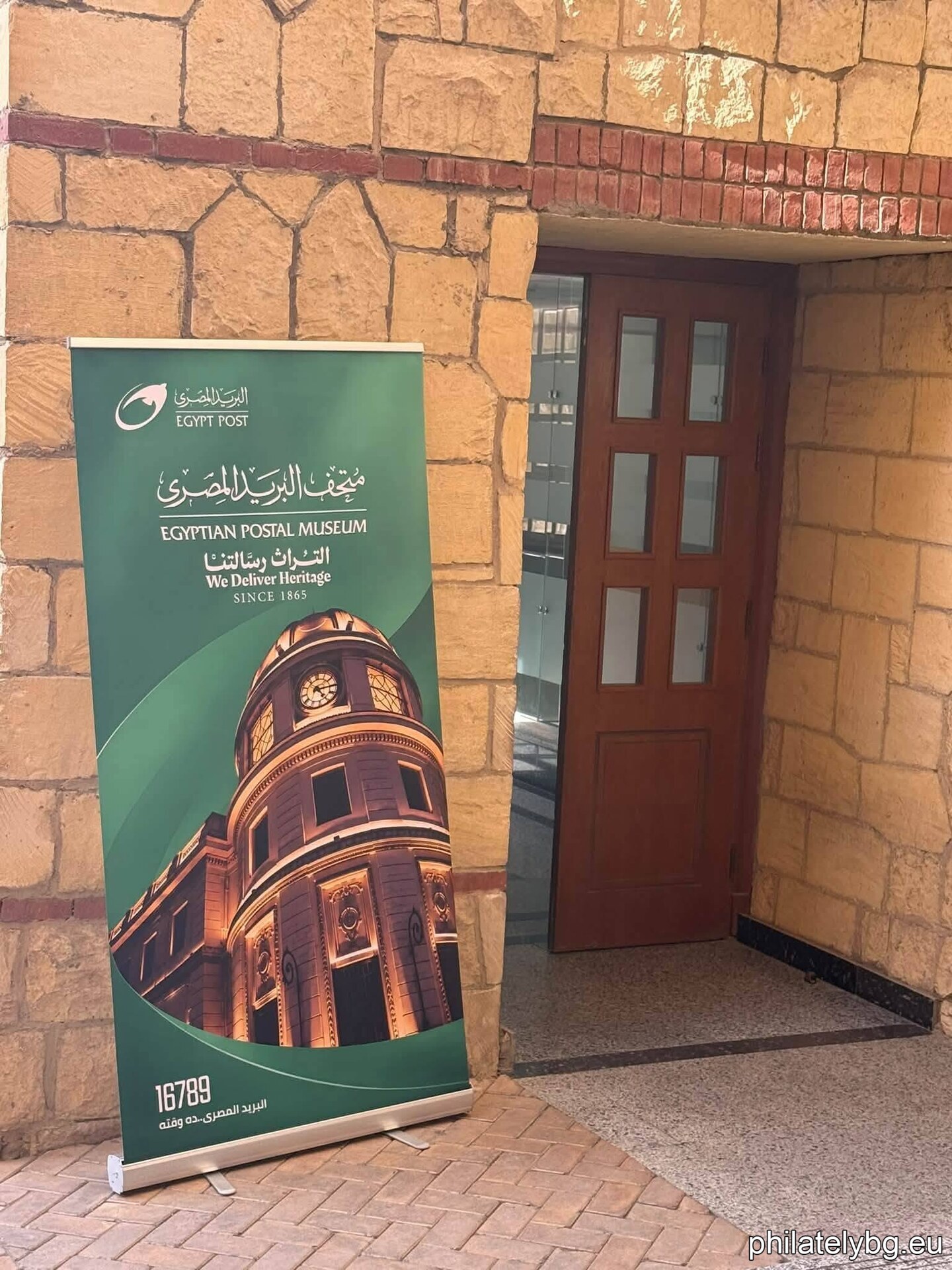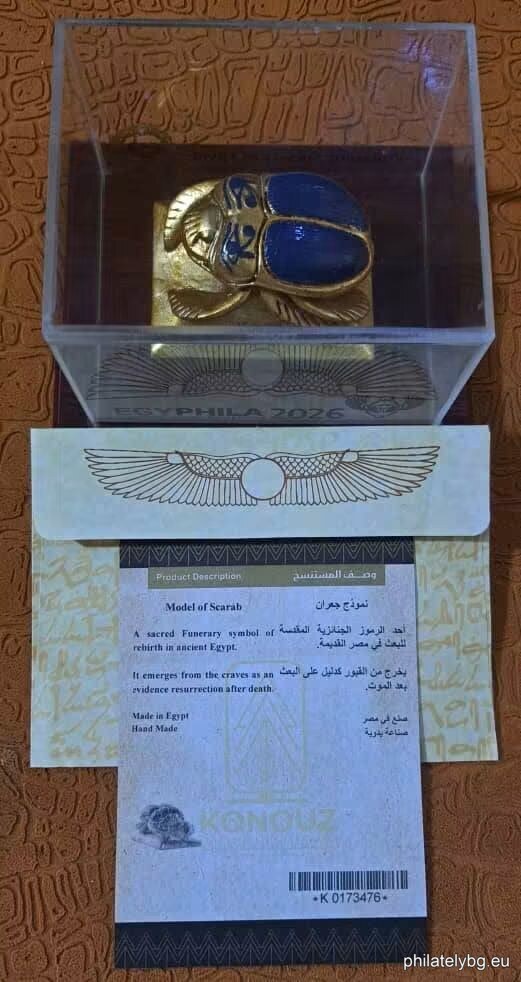

 The third edition of EGYPHILA 2026 was held from 17 to 19 September in Giza, at the Digital Egypt Innovation Centre "Creativa," next to Cairo University. The organiser was the Philatelic Society of Egypt, and the three days were devoted to stamps, postal history and philatelic research. The choice of a modern technology building to host a traditional philatelic event was in itself something of a symbolic gesture - classic collecting placed against the backdrop of digital Egypt.
The most significant thing about this edition was the change in the exhibition's status. EGYPHILA 2026 was held as a multinational exhibition under the auspices and recognition of FEPA, the Federation of European Philatelic Associations. That recognition lifts the Egyptian event out of the frame of a purely national show and gives it an international profile, allowing the organisers to present Egyptian philately to a considerably wider audience alongside exhibitors from abroad. For a country with such a rich postal history - from the Egyptian postal services of the nineteenth century to the international post offices in Alexandria and Port Said - this is a logical, if belated, step.
The scale of the exhibition speaks for itself as well. More than 300 exhibition frames were used to display the collections and philatelic studies, and participants came from Algeria, Croatia, Greece, Jordan, Lebanon, Libya, Morocco, Qatar, Saudi Arabia, Sudan, the United Kingdom and, of course, Egypt itself. This combination of North African, Middle Eastern and European entries turned Giza for three days into a meeting point for very different postal traditions - Ottoman, colonial, mandate and national - often documented on material originating from the very same territories.
The strongest foreign presence came from Greece. The Hellenic Philatelic Federation took part with 8 exhibits and 45 frames in total, making it the largest foreign participation, with almost twice as many frames as the second-largest British showing, with national commissioner Yannis Refanidis having navigated a difficult customs procedure. The result was three Gold, three Large Vermeil and two Vermeil medals: Gold for T. Arvanitis with "Prestamp Greece – International Mail" (92 points), N. Garilidis with "The Egyptian Postal Concession to the British Forces" (90 points) and Y. Refanidis with "Postal Stationery of Greece 1900–1920" (90 points), and Large Vermeil for G. Dimitriadis ("The Postal Services of the Port-Said 1885–1955"), A. Papadopoulos ("Aéropostale 1930 – Air France 1934") and T. Paschos ("The Armée d'Orient on the Macedonian Front 1915–1918"). Tellingly, two of the awarded Greek exhibits deal with Egyptian subjects - a reminder of the deep links between the two postal histories.
Qatar also achieved a serious result. The Qatar Philatelic and Numismatic Center of the Ministry of Culture announced on 20 September that its collectors had won five medals in Cairo. "Postal History of Qatar: From Sheikhdom to State (1930–1963)," "History of Nejd and Hejaz Stamps (1925–1926)" and "Lebanon Covers Held During World War II" received Large Vermeil medals, while "Postal History of Bahrain" and "History of Libya Stamps" were awarded Vermeil medals. The thematic range of these exhibits - from the Gulf through the early Saudi issues to wartime Lebanese correspondence - shows how a comparatively young collecting institution is using regional exhibitions to place its specialist holdings before international juries.
The comparison between the two delegations is instructive. Greece sent material drawn mainly from its own postal history and from the Greek presence in the Middle East; Qatar presented almost entirely material from neighbouring territories - Bahrain, Nejd and Hejaz, Libya, Lebanon. This is a characteristic feature of Arab philately, where postal borders rarely coincide with modern state ones and where the collector inevitably steps outside the national narrative. EGYPHILA 2026 offered the rare chance to see such overlapping holdings side by side.
With the exhibition closing on 19 September, EGYPHILA moved from promise to fact. The FEPA recognition, the more than 300 frames and the participation of twelve countries add up to an event that is no longer a purely Egyptian domestic affair. The question that remains is whether the organisers will manage to turn this momentum into a regular tradition - because the region needs a permanent platform, and Cairo, with its history as a crossroads for the postal routes between Europe, Africa and Asia, is the natural place for one.